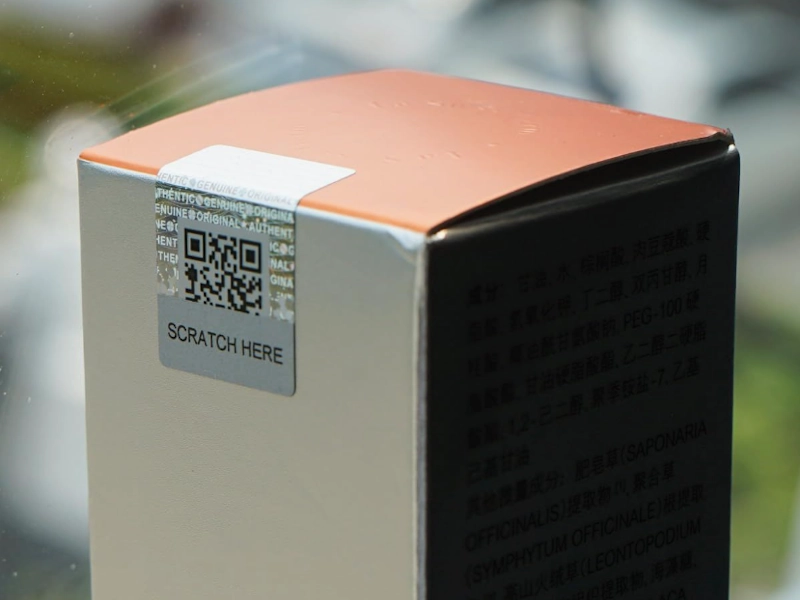
The total market value for US anti-counterfeit packaging amounted to USD 34,825.3 million in 2025.
The demand for anti-counterfeit packaging market is constantly increasing since more companies invest in modern security packaging solutions in order to secure their brands and prevent financial losses due to fake products.
As reported by IMARC Group, the global market will amount to USD 45,589.4 million by 2034, demonstrating a CAGR of 2.95% from 2026 to 2034.
United States Anti-Counterfeit Packaging Market Overview
| Attribute | Details |
|---|---|
| Base Year | 2025 |
| Historical Period | 2020–2025 |
| Forecast Period | 2026–2034 |
| Market Size (2025) | USD 34,825.3 Million |
| Market Forecast (2034) | USD 45,589.4 Million |
| CAGR (2026–2034) | 2.95% |
Counterfeit-proof packaging includes technologies and methods that help avoid the duplication and unauthorized reproduction of products.
Anti-counterfeiting technologies include such elements as tamper-proof seals, holograms, RFID chips, barcodes, and covert codes.
The goal is to guarantee product legitimacy, keep consumers away from fake products, and assist manufacturers in protecting their revenue and reputation.
The advancement of counterfeiting means that organizations need to combine visible and covert anti-counterfeiting measures for their products’ packaging.
The rising importance of the anti-counterfeit packaging market is driven by growing concerns across industries.
There is a heavy investment in intelligent packaging technology, which can track and authenticate products at any time during the supply chain.
Moreover, stringent compliance regulations by the authorities have compelled companies to use a secure packaging system.
Market Trends Driving Growth
The anti-counterfeit packaging market in the United States is witnessing rapid transformation due to technological advancements and increasing security requirements.
Businesses are widely adopting technologies such as barcodes, RFID (Radio-Frequency Identification), holograms, and taggants to enhance traceability and prevent duplication.
These technologies help verify product identity at multiple stages of distribution, reducing the risk of counterfeit infiltration.
Another key trend is the rising use of digital authentication systems that allow instant product verification.
This is particularly important in sectors like healthcare and food, where product safety is critical.
Companies are also combining physical security features with digital tools to build multi-layered protection systems.
The expansion of e-commerce has further increased the need for secure packaging solutions.
With more products being shipped directly to consumers, the risk of counterfeit goods entering supply chains has grown significantly.
As a result, businesses are strengthening packaging security across both offline and online distribution channels.
Market Segmentation Overview
The United States anti-counterfeit packaging market is segmented based on technology, feature type, and end-use industry.
| Segment Type | Categories |
|---|---|
| Technology | Barcodes, RFID, Holograms, Taggants, Others |
| Feature Type | Overt Features, Covert Features |
| End Use Industry | Food & Beverage, Healthcare, Automotive, Consumer Electronics, Others |
| Regions | Northeast, Midwest, South, West |
By technology, the market includes barcodes, RFID systems, holograms, taggants, and other advanced solutions.
Barcodes and RFID remain widely used due to their efficiency in tracking and data storage, while holograms and taggants offer high-security authentication.
By feature type, the market is divided into overt and covert features.
Overt features are visible to consumers, such as seals and holograms, allowing quick verification.
Covert features are hidden and require specialized tools for authentication, providing an additional layer of security.
Technology Segment Analysis
| Technology | Description | Key Use Cases | Market Importance |
|---|---|---|---|
| Barcodes | Machine-readable codes used for product identification and tracking | Retail goods, logistics, food packaging | Widely adopted due to low cost and easy integration |
| RFID (Radio-Frequency Identification) | Wireless tracking using radio waves for real-time data exchange | Healthcare, supply chain, automotive | High accuracy tracking and anti-theft capabilities |
| Holograms | 3D visual security images difficult to replicate | Pharmaceuticals, luxury goods, electronics | Strong visual authentication for consumers |
| Taggants | Chemical or physical markers embedded in packaging materials | High-value products, defense, pharma | Highly secure covert authentication method |
| Others | Includes digital watermarking, smart labels, and forensic markers | Emerging industries and niche applications | Growing adoption with smart packaging innovation |
By end-use industry, the market includes food and beverage, healthcare, automotive, consumer electronics, and others.
The healthcare sector represents a major share due to strict regulatory requirements, while food and beverage industries rely heavily on secure packaging to maintain quality and safety.
Regional Outlook
The United States anti-counterfeit packaging market is segmented into the Northeast, Midwest, South, and West regions.
The South and West regions are experiencing strong growth due to expanding manufacturing and technology sectors.
Meanwhile, the Northeast and Midwest regions continue to invest in advanced security packaging, particularly in healthcare and industrial applications.
Competitive Landscape
Key players operating in the market include Authentix, Ennoventure Inc., NeuroTags Inc., and Systech International, among others.
These companies are focusing on innovation, research and development, and strategic partnerships to strengthen their market position.
The integration of AI-based tracking systems and digital authentication solutions is becoming a major competitive strategy across the industry.
About the Market
The anti-counterfeit packaging market is becoming a critical component of modern supply chains, driven by rising counterfeit threats and increasing demand for product safety.
With continuous advancements in packaging technologies and growing regulatory support, the market is expected to experience steady and sustained growth over the forecast period.
Leave a Reply