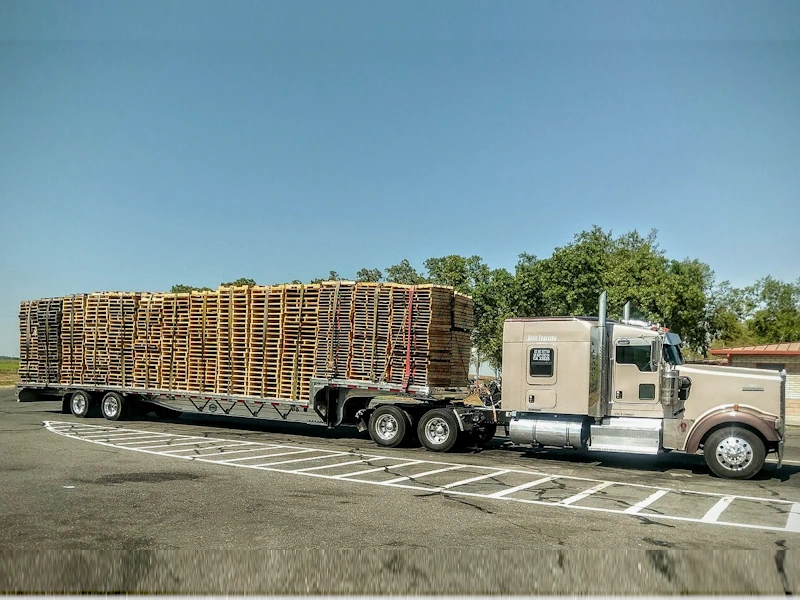
The number of pallets that can fit inside a truck plays a significant role in the effective planning of cargo shipments.
This is because the more pallets that can fit within a truck’s load limit, the fewer trips will be required to complete the shipment process.
In the shipping industry, cargo trailers have fixed capacities in terms of the size of the load they carry.
Therefore, it follows that the most common standard pallet sizes used are 26 single-layered pallets in a 53-foot dry van trailer.
Proper loading methods like pinwheel pallet loading can also help maximize trailer space.
Standard Pallet Sizes and Dimensions
It is necessary to determine the size of the pallet that will be loaded on the truck before determining the capacity of the trailer. The 48-inch by 40-inch GMA pallet is the most prevalent pallet used across North America.
It is widely used due to its versatility and compatibility with trailer loading and warehouses.
Common Pallet Sizes
Different industries use different pallet sizes depending on the products being shipped.
| Pallet Type | Dimensions | Common Uses |
|---|---|---|
| GMA Pallet | 48″ × 40″ | Retail and grocery |
| European Pallet | 47.24″ × 39.37″ | International shipping |
| Block Pallet | 48″ × 48″ | Industrial products |
| Half Pallet | 48″ × 20″ | Retail displays |
Wooden pallets remain the most common choice because they are affordable and widely available.
53-Foot Dry Van Trailer Capacity
The 53-foot dry van trailer is the most common trailer used for full truckload shipping.
It provides large cargo space and protects products from weather and road debris.
The trailer interior is usually around:
- 53 feet long
- 8 feet 6 inches wide
- 9 feet high
A standard 53-foot trailer can hold:
26 pallets single-stacked
Up to 52 pallets double-stacked
Most loaders place pallets in two straight rows inside the trailer. This arrangement keeps the load balanced and organized.
How Pallets Are Arranged?
Standard pallets are often loaded lengthwise. This creates enough room for 13 pallets on each side of the trailer. Straight loading is simple and widely used in freight shipping.
Some companies also use advanced pallet loading patterns to fit pallets more efficiently. These methods may rotate or reposition pallets to reduce empty spaces.
48-Foot Trailer Capacity
The 48-foot trailer is slightly smaller than a 53-foot trailer. It is commonly used for regional deliveries and routes with length restrictions.
Its interior dimensions are close to:
- 48 feet long
- 8 feet 6 inches wide
- 9 feet high
This trailer usually fits:
- 24 pallets single-stacked
- Up to 48 pallets double-stacked
Although smaller, it still supports efficient pallet transportation for medium-sized freight loads.
40-Foot Shipping Container Capacity
The 40-foot container is popular in international and intermodal shipping. It is narrower than a dry van trailer, so fewer pallets fit inside.
Typical container dimensions include:
- 39 feet 5 inches long
- 7 feet 8 inches wide
- 7 feet 9 inches high
- Most 40-foot containers carry:
- 18 to 20 pallets single-stacked
- 36 to 40 pallets double-stacked
The smaller width often requires different pallet arrangements to maximize space.
26-Foot Box Truck Capacity
Box trucks are commonly used for local deliveries and smaller freight loads. They are easier to drive in urban areas and work well for short-distance shipping.
A standard 26-foot box truck usually holds:
- 12 pallets single-stacked
- Up to 24 pallets double-stacked
These trucks are ideal for businesses that do not need a full-size trailer for deliveries.
Factors That Affect Pallet Capacity
Trailer size is not the only factor affecting pallet capacity. Several other details can change how many pallets fit safely inside a truck.
Pallet Size and Orientation
Larger pallets take up more floor space and reduce trailer capacity. Smaller pallets may allow more units to fit inside the truck.
Pallet direction also matters. Some companies use pinwheel loading methods to rotate pallets and fill gaps more effectively.
This method may improve space usage for non-standard pallets or special cargo shapes.
Cargo Weight
Every truck has a legal weight limit. Heavy cargo may reach the maximum weight before the trailer becomes full.
Important weight factors include:
- Empty pallet weight
- Product weight
- Total cargo weight
- Trailer weight limits
Heavy products like metal parts or liquids may reduce the number of pallets allowed inside the truck.
Cargo Height and Stackability
Double-stacking can increase trailer capacity, but not all products can handle stacking safely.
Products that may not support stacking include:
- Glass items
- Electronics
- Fragile goods
- Irregularly shaped products
Pallet height must also stay within the trailer’s vertical space limit.
Loading Equipment
Loading tools also affect pallet positioning. Forklifts and pallet jacks need room to move during loading and unloading.
Sometimes loaders leave small spaces between pallets for safer handling. Proper loading improves both safety and shipment stability.
How to Calculate Pallet Capacity
Businesses often calculate pallet capacity before booking freight shipments. This helps avoid wasted space and prevents overloading.
Step 1: Measure Your Pallets
Measure the pallet length, width, and loaded height carefully. Accurate dimensions improve shipment planning.
Step 2: Measure Trailer Dimensions
Check the trailer’s interior dimensions before loading. Different trailers provide different cargo space.
Step 3: Calculate Floor Positions
Divide the trailer width by the pallet width to see how many fit side-by-side. Then divide trailer length by pallet length.
Multiply these numbers to estimate the total floor pallet positions.
Step 4: Check Double-Stacking
Double-stacking only works if:
- Cargo can handle weight
- Combined height fits inside the trailer
- Total shipment stays within legal weight limits
- This step is important for maximizing trailer capacity safely.
Some companies use a pallet loading diagram to visualize pallet placement before loading begins. This helps workers organize freight more efficiently.
Choosing the Right Trailer
Selecting the right trailer depends on shipment size, cargo weight, and delivery distance.
A 53-foot dry van works best for large shipments with many pallets. Smaller shipments may use box trucks or less-than-truckload services instead.
Dry van trailers are preferred because they protect freight from:
- Rain
- Dust
- Sunlight
- Road debris
The enclosed trailer also improves cargo security during transportation.
Benefits of Efficient Pallet Loading
Proper pallet loading saves money and improves shipping performance. Businesses can transport more products while reducing freight costs.
- Better trailer space usage
- Lower shipping expenses
- Improved cargo safety
- Faster loading and unloading
- Reduced product damage
Professional loaders often use smart loading techniques to improve trailer efficiency.
Importance of Experienced Carriers
Experienced carriers understand how to maximize pallet capacity while following transport regulations. They know how to balance loads safely and reduce shipping risks.
Skilled freight teams also understand trailer dimensions, cargo limits, and safe stacking practices. This helps businesses avoid costly loading mistakes.
Many freight companies use organized loading systems and advanced planning methods to improve shipping efficiency.
Conclusion
Understanding trailer capacity helps businesses plan freight shipments more effectively.
Standard pallet sizes and trailer dimensions determine how many pallets fit inside a truck.
Loading methods, cargo weight, and stacking ability also affect final capacity.
Techniques like pinwheel pallet loading and organized pallet arrangements can improve trailer space usage.
Businesses also use special loading methods and smart planning to maximize efficiency.
Choosing the correct trailer and using proper loading techniques help reduce costs, improve safety, and protect products during transportation.
Leave a Reply