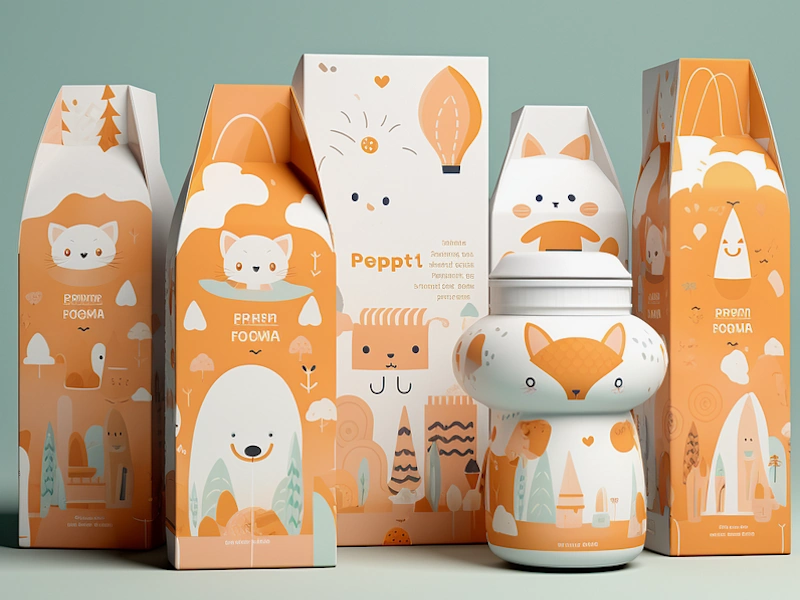
Baby Food Packaging Market Experiences Robust Expansion Fueled by Increasing Demand for Safe, Easy-to-Use, and Portion-Based Packaging Solutions
The global baby food packaging market is showing steady growth owing to the rising need for hygienic, convenient, and sterile packaging systems.
The global baby food packaging industry has been witnessing steady growth since there is a rising need for nutritious, safe, and portion-controlled baby food products.
According to market research, the North American region is seeing a shift from USD 2.04 billion in 2023 to USD 2.19 billion in 2024 because of the increased demand for innovative packaging solutions.
A major trend shaping the baby food packaging market is the rising adoption of portion-controlled packaging.
This format provides pre-portioned meals that do not require any kind of preparation effort.
The packaging guarantees convenience for parents and caregivers, who always need a quick solution to feed their children.
Pouch and container packages have gained popularity as they help in avoiding any kind of waste, ensure hygiene, and provide consistency in the intake of nutrition.
Portion-based packaging is set to experience growing demand during the forecast period due to its increasing relevance.
Another important application of portion-based packaging is that it enables healthy infant nutrition.
Parents get an opportunity to keep track of how much food their infants consume, thereby promoting good eating habits in them.
Hygiene, safety, and convenience are some of the main reasons why consumers prefer such types of packaging.
In recent times, there has been an increased focus on developing innovative portion control packaging formats that will reduce contamination risk and enhance the usability of the products.
Baby Food Packaging Market Growth Factors
A key driver of the baby food packaging market is the increasing demand for pouch-based packaging solutions.
Stand-up pouches are widely used due to their lightweight structure, portability, and cost efficiency.
These packaging formats are easier to transport and require less material compared to rigid alternatives.
Additionally, they support eco-friendly initiatives by reducing plastic usage while maintaining durability and product safety.
Their multi-layer structure enhances protection against moisture, air, and contamination, ensuring a longer shelf life for baby food products.
Pouches are especially preferred by working parents due to their ease of use. They are simple to open, reseal, and store, making them highly convenient for on-the-go feeding.
In the baby food packaging market, innovations such as microwave-safe and reusable pouches are further improving consumer convenience.
These features not only enhance usability but also support brand differentiation in a highly competitive market.
As sustainability becomes a priority, pouch packaging is expected to witness continued strong growth.
Growing consumer awareness regarding food sources and nutrition is another important factor driving the baby food packaging market.
Parents are increasingly concerned about the quality and safety of baby food products, leading to higher demand for transparent and secure packaging solutions.
Eco-friendly packaging materials are also gaining popularity as sustainability becomes a key purchasing factor.
Manufacturers are responding by introducing safer and more responsible packaging formats, including spouted pouches that enhance controlled feeding and reduce spillage.
Restraining Factors
Despite strong growth, the baby food packaging market faces challenges related to product perishability and packaging defects.
Baby food products are highly sensitive and require specialized packaging materials to maintain freshness and safety.
Improper packaging can lead to contamination, spoilage, and reduced shelf life, increasing operational costs for manufacturers.
These risks also affect brand reputation and consumer trust, making quality control a critical concern in the industry.
Packaging failures or defects can directly impact product safety, especially in infant nutrition.
Any contamination issue can lead to serious health concerns and regulatory scrutiny.
This creates pressure on manufacturers to invest in advanced materials and strict quality assurance systems.
As a result, while innovation is increasing, cost pressures and technical challenges continue to restrain the full growth potential of the baby food packaging market.
Baby Food Packaging Market Segmentation Analysis
Based on material, plastic remains the leading segment in the baby food packaging market due to its lightweight structure, durability, and cost efficiency.
Plastic offers excellent sealing properties that help extend shelf life and protect food quality.
Metal packaging holds the second-largest share due to its strength, barrier properties, and resistance to contamination, making it suitable for long-term storage solutions.
Based on type, liquid baby food dominates the market due to its ease of consumption and convenience.
Liquid products are widely packaged in pouches and bottles, making them suitable for on-the-go feeding.
The dried segment also holds a significant share, driven by demand for long-lasting and easy-to-store baby food options in busy households.
Based on product type, bags and pouches hold the largest share in the baby food packaging market due to their portability, lightweight design, and extended shelf life benefits.
Boxes and cartons follow as the second-largest segment, offering strong protection for dry and semi-solid baby food products while maintaining easy storage and transport efficiency.
Regional Insights
North America leads the global baby food packaging market, driven by busy lifestyles, strong industry presence, and continuous innovation in packaging technology.
The region reached USD 2.34 billion in 2025 and continues to show strong growth potential.
Europe follows with strict food safety regulations and increasing demand for sustainable packaging solutions.
Asia Pacific is witnessing rapid growth due to rising population, urbanization, and expanding e-commerce channels.
Latin America and the Middle East & Africa are also experiencing steady growth supported by increasing awareness and improving disposable income.
Competitive Landscape
The baby food packaging market is highly competitive, with several global players focusing on innovation and expansion.
Key companies include Amcor, Winpak Ltd, Sonoco, Tetra Pak, Printpack, Trivium Packaging, Huhtamaki, Scholle IPN, Greiner Packaging, and Constantia Flexibles.
These companies are investing in advanced packaging technologies, sustainable materials, and smart packaging solutions to strengthen their market position.
Strategic partnerships and product innovation remain key growth strategies across the industry.
Final Verdict
The baby food packaging market is expected to witness strong and sustained growth driven by increasing demand for safe, convenient, and portion-controlled packaging solutions.
Rising consumer awareness, technological advancements, and growing preference for eco-friendly packaging are shaping market development.
Leave a Reply