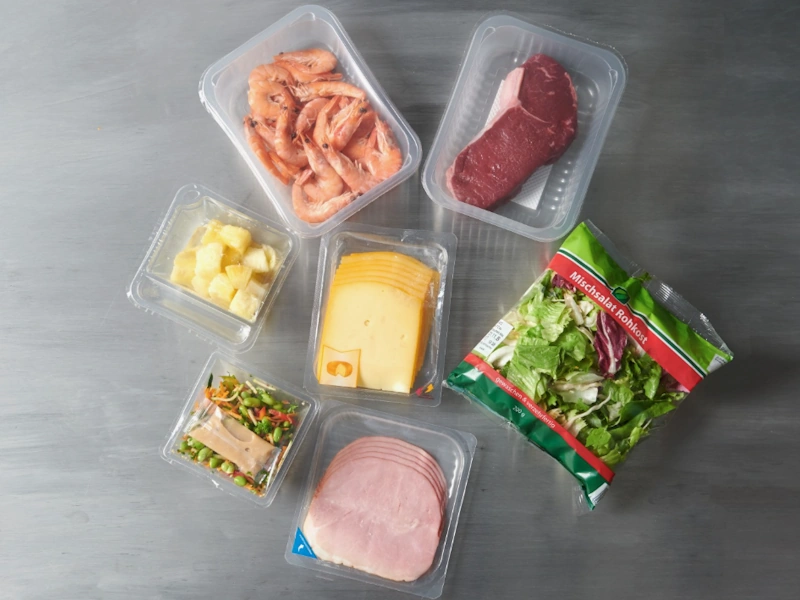
Modified Atmosphere Packaging Market Expands Globally as Food Preservation Technologies Reshape Packaging Industry
The modified atmosphere packaging news shows promising trends of continued expansion globally.
The modified atmosphere packaging market size reached USD 21.15 billion in 2025 and is anticipated to rise from USD 22.63 billion in 2026 to USD 40.02 billion in 2034, with a CAGR of 7.39% over the forecast period.
Market volume in the USA is expected to grow steadily, reaching USD 7.71 billion in 2032 due to growing interest in MAP packages that extend food shelf life and minimize food waste.
MAP technology has evolved into one of the most significant innovations in contemporary food delivery.
It allows controlling air composition in a food package, thereby preserving perishables and increasing their shelf life without changing their appearance and taste.
Food Preservation Continues to Drive Market Expansion
The consumer desire for foods that are fresh and stay fresh for longer periods has led to an evolution in packaging techniques not only in America but in other foreign countries as well.
Modified atmosphere packaging has proved to be an efficient technique in slowing down product spoilage without requiring any preservatives.
In modified atmosphere packaging, gases and oxygen levels in the packaging are controlled.
The growing adoption of MAP is being supported by:
- Increasing consumption of packaged foods
- Expansion of modern retail channels
- Rising focus on food safety
- Demand for premium food experiences
- Greater emphasis on reducing food waste
Food manufacturers continue integrating MAP systems into production lines to improve distribution efficiency and product performance.
Packaging Innovation Accelerates Industry Development
Continuous advancements in packaging technologies remain a major market trend.
Modified atmosphere packaging is increasingly being combined with complementary preservation solutions to improve packaging performance and support product integrity.
Emerging technologies supporting market growth include:
- Reduced oxygen packaging
- High-pressure processing
- Freeze-drying systems
- Cold plasma technology
- Electric pulse field applications
- Controlled atmosphere films
Manufacturers are also introducing laser perforation technologies that create breathable films and allow controlled gas exchange for improved freshness.
High-breathable packaging formats are gaining attention because they help maintain product quality while reducing spoilage.
Growing Demand for Meat and Ready-to-Eat Foods Supports Growth
The increasing consumption of meat products and convenience foods remains one of the strongest growth drivers.
MAP has become widely adopted for meat packaging because it helps preserve freshness while enabling efficient transportation and distribution.
The technology is increasingly used for:
- Fresh meat products
- Processed meat categories
- Ready-to-eat meals
- Refrigerated convenience foods
- Seafood applications
- Fresh produce packaging
The expanding working population and changing eating habits continue to increase demand for packaged meal solutions that combine convenience and quality.
Shelf Life Extension Creates Long-Term Market Opportunities
One of the major advantages of modified atmosphere packaging is its ability to preserve products without significantly altering their natural characteristics.
MAP helps maintain:
- Original flavor profiles
- Product appearance
- Fresh texture
- Nutritional quality
- Food safety standards
Applications continue expanding across multiple product categories, including coffee, bakery products, cheese, snacks, sandwiches, pasta, fresh produce, and processed foods.
By extending freshness cycles, businesses can also reduce product replacement frequency and improve inventory management.
Sustainability Goals Increase Adoption of MAP Solutions
Food waste reduction has become a major sustainability objective across the packaging industry.
Modified atmosphere packaging contributes to environmental initiatives by helping reduce spoilage throughout the supply chain.
Key sustainability advantages include:
- Lower food waste generation
- Reduced product disposal
- Improved supply chain efficiency
- Reduced dependence on preservatives
- Lower carbon impact from replacement shipments
Packaging companies continue developing solutions that balance preservation performance with environmental responsibility.
High Costs and Operational Challenges Remain Key Concerns
Despite strong growth potential, several factors continue to limit broader adoption.
MAP systems require substantial investment in machinery, packaging materials, and gas management infrastructure.
Major challenges include:
- High initial equipment costs
- Increased packaging material expenses
- Higher transportation costs
- Refrigeration requirements
- Additional preservation measures for sensitive products
Although MAP extends shelf life, refrigeration remains essential because bacterial activity can continue under certain temperature conditions.
These factors continue to influence purchasing decisions across smaller food businesses.
Plastic Materials Continue Leading Market Demand
By material type, plastic remains the dominant segment and is expected to maintain a leading position with a market share exceeding 92% in 2026.
Plastic materials continue gaining preference due to their strong protective characteristics.
Advantages include:
- Excellent oxygen barriers
- Moisture resistance
- High tensile strength
- Strong puncture resistance
- Compatibility with preservation gases
Materials such as polyethylene, polypropylene, and polyamide support the performance requirements of modified atmosphere packaging.
At the same time, paperboard alternatives are attracting interest due to growing sustainability initiatives.
Films and Liners Lead Product Category Growth
By product type, films and liners continue to represent the largest segment.
These materials accounted for more than half of total demand and remain essential in preserving fresh and prepared food products.
Their popularity is driven by:
- Shelf life extension
- Improved product visibility
- Fog resistance during refrigeration
- Better product presentation
- Reduced spoilage risk
MAP trays are also gaining wider use for packaging meat, seafood, and convenience meals.
Food Industry Maintains Largest End-Use Share
Food remains the dominant end-use segment and is projected to account for more than 92% of market demand.
Food producers continue expanding MAP applications to improve freshness and reduce spoilage across multiple categories.
Major applications include:
- Bakery products
- Dairy products
- Meat and seafood
- Fresh produce
- Coffee packaging
- Ready-to-eat meals
Healthcare remains the second-largest end-use segment as manufacturers adopt MAP to preserve pharmaceutical quality and medical products.
Regional Markets Continue Expanding Worldwide
Europe maintained leadership in 2025 with a market share of 34.31%, supported by technological innovation and strong packaged food demand.
North America remains the second-largest market, driven by increasing consumption of frozen, packaged, and convenience foods across the United States.
Asia Pacific continues expanding due to greater adoption of MAP for:
- Dairy packaging
- Fresh produce preservation
- Pharmaceutical protection
Meanwhile, Latin America benefits from food delivery growth and consumer preference for minimally processed products.
The Middle East and Africa continue to generate opportunities through growing demand for meat, dairy, and seafood packaging.
Competitive Landscape Focuses on Product Innovation
The market remains highly competitive, with companies expanding their product portfolios and introducing advanced preservation technologies.
Leading participants continue investing in innovation and customer expansion.
Major companies include:
- Klöckner Pentaplast
- Amcor
- Mondi
- ProAmpac
- Graphic Packaging International
- Winpak Ltd
Industry participants continue focusing on intelligent packaging, advanced films, and operational efficiency to strengthen market positioning.
Outlook
The future outlook remains positive as food manufacturers continue prioritizing freshness, shelf life, sustainability, and supply chain performance.
Technological improvements, changing consumer preferences, and rising packaged food consumption are expected to create new opportunities across regions.
As investment in preservation technologies continues to increase, modified atmosphere packaging news is expected to remain a major focus area across the global packaging industry.
Leave a Reply