

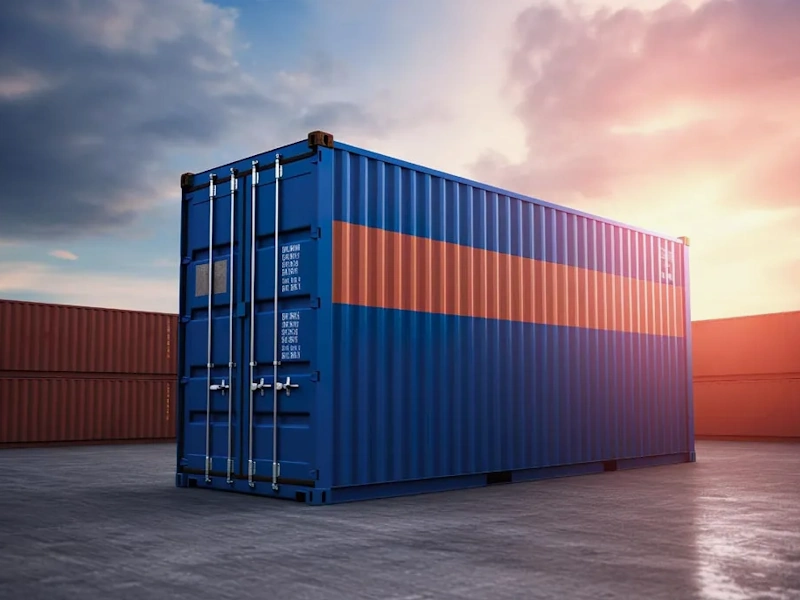
The shipping container market continues to experience tremendous growth due to the continuous expansion of international trade, logistics transportation in industries, and logistics packaging services, among other things.
In fact, the market is expected to grow from USD 13.18 billion in 2026 to reach USD 38.03 billion by 2035 at a CAGR of 12.5%.
The increased need for cargo security, rise in shipment of goods via e-commerce, and rapid development of logistics technologies are among the main factors fueling the growth of the market.
Shipping containers have become increasingly vital to international transportation and packaging.
This type of packaging enables industries to move their goods in containers using railroads, ships, and trucks without the need to unload and reload their products several times.
Shipping containers are vital to many industries, including pharmaceuticals, food, electronics, automotive, chemicals, and retail packaging.
Growth Drivers in the Global Shipping Container Market
The global market is experiencing growth due to increased import and export operations as well as the requirement for better transportation. In this regard, manufacturers are creating sturdy containers that will ensure the protection of goods against factors such as moisture, heat, and mechanical damage. The companies engaged in industrial packaging are increasingly relying on the use of container transport systems in order to cut down their losses.
Standardized Containers Improve Logistics Efficiency
Modern containers used in transport operations are made from sturdy materials such as steel and have standardized sizes.
Such containers can be easily transported by ships, trains, and road transport systems.
E-Commerce and Sustainability Support Market Growth
The rise of global e-commerce has also increased demand for shipping containers. Online retailers require secure transportation for bulk products, warehouse inventory, and packaging materials.
Shipping containers simplify large-scale transportation and support fast-moving supply chains.
Reusable containers also reduce packaging waste and lower environmental impact, encouraging businesses to adopt eco-friendly logistics systems and recyclable shipping solutions.
Smart Technologies Reshaping Container Operations
Technology is transforming the container industry rapidly. Artificial intelligence, IoT-enabled smart containers, and automation systems are improving shipping efficiency worldwide.
Smart containers now provide real-time tracking, temperature monitoring, and route optimization, helping companies manage cargo more effectively.
Advanced Monitoring and Route Optimization
AI-powered systems can analyze shipping routes, fuel usage, weather conditions, and operational risks to improve transportation planning.
These technologies also help businesses predict equipment failures and reduce maintenance costs.
With advanced monitoring systems, shipping companies can improve cargo safety and avoid delays caused by operational issues.
Automation at Ports and Shipping Terminals
Automation is also becoming common at ports and shipping terminals. Robotic loading systems and automated cranes are reducing manual work while improving speed and accuracy.
These advancements are helping shipping companies manage rising global cargo volumes more efficiently.
Growth in the Shipping Container Modification Market
The growing use of smart logistics solutions has increased interest in the shipping container modification market.
Businesses are customizing containers for storage facilities, mobile offices, modular housing, retail spaces, and industrial applications.
Modified containers offer flexibility and cost savings for companies looking for temporary or portable infrastructure solutions.
Market Trends Influencing Future Growth
Several trends are shaping the future of the industry. One of the biggest trends is the rising demand for environmentally friendly shipping systems.
Companies are increasingly adopting recyclable materials, reusable containers, and energy-efficient transportation methods to reduce carbon emissions.
IoT Integration in Containers
IoT integration is another major trend. Smart sensors installed in containers help monitor humidity, temperature, cargo movement, and security conditions during transportation.
This technology is especially valuable for industries transporting food, pharmaceuticals, and temperature-sensitive products.
Rise of Autonomous Shipping
Autonomous shipping vessels are also gaining attention. AI-powered ships and automated navigation systems are expected to reduce operational costs and improve shipping efficiency in the coming years.
Shipping businesses are investing heavily in automation to stay competitive in the evolving global logistics industry.
Demand for Specialized Containers
The market is also experiencing increasing demand for specialized containers such as refrigerated containers, tank containers, and flat-rack containers.
Industries transporting chemicals, liquids, frozen food, and oversized industrial equipment require customized shipping solutions for safe delivery.
Supply Chain and Freight Challenges
According to recent shipping container market news, geopolitical tensions and fuel price fluctuations continue to affect global shipping routes.
Delays in major waterways and rising freight costs are encouraging companies to invest in stronger logistics infrastructure and flexible transportation systems.
ISO Containers Continue to Dominate the Market
ISO containers remain the most widely used container type worldwide. These containers follow international standards, allowing seamless transportation across ships, trucks, and railways.
Their standardized sizes simplify stacking, loading, unloading, and cargo management.
ISO containers reduce handling costs and improve supply chain efficiency. They also provide secure, lockable structures that protect cargo during transportation.
Industries prefer ISO containers because they are compatible with global logistics systems and meet international safety regulations.
The demand for dry containers also continues to rise due to their affordability and wide range of applications.
Dry containers are commonly used for transporting electronics, machinery, packaged products, textiles, and industrial goods.
Their sealed design protects products from environmental damage during shipping.
Why 40-Foot Containers Lead the Industry
The 40-foot container segment dominates the market because of its large storage capacity and cost-effectiveness.
These containers can transport substantial cargo volumes while remaining compatible with global transportation systems.
Businesses prefer 40-foot containers because they reduce shipping costs per unit and improve cargo management efficiency.
Their standardized dimensions also allow easier movement through ports, railways, and warehouses.
These containers are highly versatile and widely used in international trade operations.
Wood flooring remains a popular choice in shipping containers because it provides durability, affordability, and strong resistance to heavy loads.
Wooden floors also improve cargo grip and reduce slippage during transportation.
Sustainable wood sources and eco-friendly flooring materials are further increasing demand for wooden container flooring.
Regional Insights and Market Performance
Asia Pacific continues to dominate the market due to strong manufacturing activities and high export volumes.
Countries such as China, India, Japan, and South Korea are major contributors to global container production and shipping operations.
Low labor costs and expanding industrial activities are supporting market growth across the region.
China Strengthens Container Production
China remains one of the leading manufacturing hubs for shipping containers. The country’s strong industrial base, large export sector, and advanced port infrastructure help drive container demand.
Chinese manufacturers continue investing in advanced technologies and durable container designs to strengthen their global position.
North America Expands Logistics Infrastructure
North America also holds a significant market share because of strong import-export activities and well-developed logistics networks.
The United States plays a major role in global container transportation through advanced ports, rail systems, and highway infrastructure.
E-Commerce Drives North American Demand
The rapid expansion of e-commerce companies and warehouse facilities in North America is increasing demand for reliable container transportation systems.
Logistics providers are investing in smart tracking systems, AI-based inventory management, and sustainable shipping practices to improve operational performance.
Growth Across Latin America and MEA
Latin America and the Middle East are also witnessing increasing container demand due to industrial growth, port modernization, and expanding trade routes.
Countries in these regions are investing in stronger maritime infrastructure to improve international trade operations.
Competitive Landscape and Industry Outlook
The shipping container market is expected to grow steadily in the coming years. Firms such as Maersk, MSC, COSCO, CMA CGM, Hapag-Lloyd, and Ocean Network Express are incorporating smart logistics, automation, and sustainable logistics to improve their market positions.
Firms are increasing container leasing operations and employing the use of Artificial Intelligence (AI) in tracking systems and automated shipping methods.
Future prospects of the global shipping container market seem promising due to increased trade volumes and investments in supply chains.
The adoption of sustainable and smart logistics is projected to drive market growth in the coming years.

