

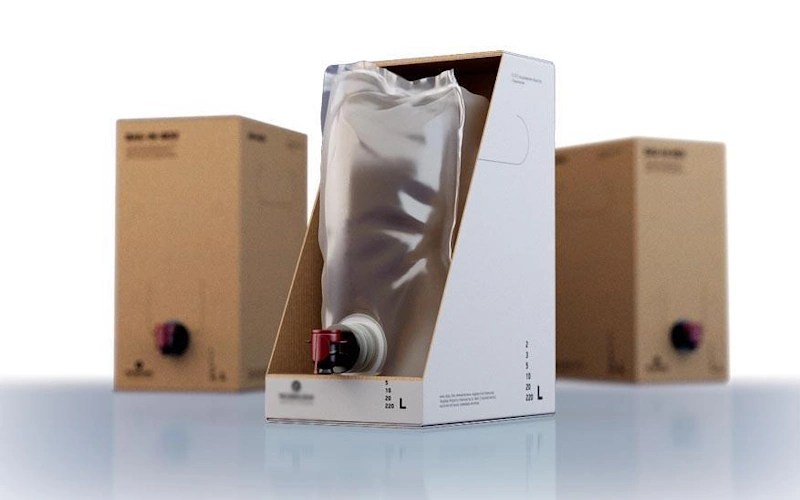
We can see an immense change in the packaging industry. That is why bag in box containers market is rapidly growing.
Now packaging comes in flexible bags that are versatile. For all liquid and beverage items, these are the ultimate options.
Bags are replacing boxes, and this change in the market influences retail operations and transportation. It influences environmental packaging trends as well.
What Are Bag in Containers?
They combine a durable corrugated box with a flexible inner bag. The bag holds the product while the box provides protection during storage and shipping.
This packaging system in the box containers market is designed to keep liquids fresh and safe. It is commonly used for products such as juices and industrial liquids.
The design helps reduce product waste and extends shelf life, which makes it attractive to both manufacturers and consumers.
Growing Demand Across Multiple Industries
The bag-in-box containers market is expanding because many industries are discovering its advantages. Businesses are looking for packaging that reduces costs while improving product protection.
- Industries using bag-in-box packaging include:
- Food and beverages
- Dairy products
- Wine and spirits
- Household cleaning products
- Industrial chemicals
- Pharmaceutical products
As demand grows across these sectors, manufacturers continue investing in new technologies and production capabilities.
Impact on the Food and Beverage Industry
One of the biggest effects of the bag-in-box containers market can be seen in the food and beverage sector. Companies need packaging that preserves freshness while making transportation easier.
Bag-in-box systems help protect products from oxygen exposure, which can improve shelf life.
This is especially important for juices, sauces, syrups, and dairy products. The packaging also allows consumers to dispense products easily without contamination.
For beverage producers, the packaging offers a practical solution that balances product quality and operational efficiency.
Benefits for Food Manufacturers
Food companies choose bag-in-box packaging because it provides several advantages:
- Longer product shelf life
- Reduced packaging waste
- Lower transportation costs
- Better product protection
- Easy storage and handling
These benefits help manufacturers improve profitability while meeting consumer expectations.
Reducing Transportation and Logistics Costs
Transportation expenses are a major concern for manufacturers. Traditional rigid containers often take up more space and add extra weight during shipping.
Bag-in-box containers help solve this challenge because they are lightweight and space-efficient.
Empty bags can be transported and stored more easily than rigid containers. Once filled, the packaging provides excellent protection while using fewer materials.
As a result, companies can reduce fuel consumption, improve warehouse efficiency, and lower overall logistics expenses.
Supporting Sustainability Goals
Environmental concerns are encouraging businesses to adopt more sustainable packaging solutions. Bag-in-box containers support these efforts in several ways.
The packaging uses less plastic than many traditional containers. The outer carton is often made from recyclable materials, helping reduce environmental impact.
Additionally, the lightweight design lowers transportation emissions throughout the supply chain.
Many organizations now include sustainable packaging goals in their business strategies.
The growing popularity of bag-in-box systems reflects this shift toward environmentally responsible packaging solutions.
Influence on Consumer Convenience
Modern consumers value convenience when choosing products. Bag-in-box containers offer several features that improve the user experience.
Many designs include dispensing taps that allow controlled pouring without spills. The packaging is easy to store and can fit conveniently into refrigerators, kitchens, and commercial spaces.
Consumers appreciate packaging that:
- Keeps products fresh longer
- Is easy to carry
- Minimizes mess
- Reduces product waste
- Offers simple dispensing
These features contribute to increasing customer satisfaction and repeat purchases.
Technological Innovations Driving Market Growth
Technology is playing an important role in the development of the bag-in-box containers market.
Manufacturers are creating stronger films, improved dispensing systems, and more sustainable materials.
Advanced barrier films help protect products from oxygen, moisture, and contamination. Improved filling equipment increases production efficiency while maintaining product quality.
Research and development efforts continue to focus on:
Smarter Packaging Solutions
Some companies are exploring smart packaging technologies that allow product tracking and monitoring. These innovations may improve inventory management and supply chain visibility in the future.
Sustainable Material Development
Manufacturers are also developing recyclable and bio-based materials that further reduce environmental impact. These improvements help companies meet evolving sustainability standards and consumer expectations.
Challenges Facing the Market
Although the market is growing, several challenges remain.
- Recycling Limitations
While outer cartons are often recyclable, the inner plastic bags can sometimes be difficult to recycle through standard systems. This issue continues to drive research into more sustainable alternatives.
- Consumer Awareness
Some consumers are still unfamiliar with bag-in-box packaging for certain product categories. Manufacturers must educate customers about its benefits and performance.
- Competition from Alternative Packaging
Flexible pouches, plastic bottles, and rigid containers continue to compete with bag-in-box solutions. Companies must continue innovating to maintain their competitive advantage.
Future Outlook of the Bag-in-Box Containers Market
The future of the bag-in-box containers market looks promising. Increasing demand for sustainable packaging, cost reduction, and improved product protection will continue supporting market growth.
Emerging economies are expected to create new opportunities as food processing, beverage production, and industrial manufacturing expand.
At the same time, technological advancements will make these packaging systems even more efficient and environmentally friendly.
Businesses that adopt innovative bag-in-box solutions may gain significant advantages in operational efficiency, sustainability, and customer satisfaction.
Conclusion
The bag-in-box containers market is having a significant impact on modern packaging industries.
From reducing transportation costs and supporting sustainability goals to improving product protection and consumer convenience, this packaging format offers numerous advantages.
As technology continues to advance and environmental concerns remain a priority, bag-in-box containers are expected to play an even larger role in the future of global packaging.
Their ability to combine efficiency, practicality, and sustainability makes them one of the most important packaging innovations in today’s market.

