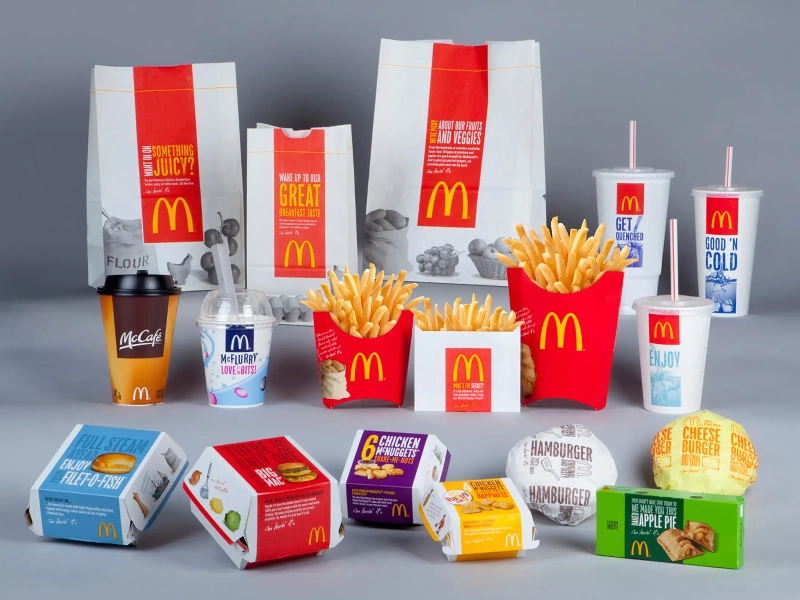
McDonald’s Taiwan Introduces Sustainable Packaging Initiative Across Restaurants
Mcdonald’s taiwan packaging changes create a new standard in sustainability.
Several sustainable packaging solutions have been implemented at McDonald’s restaurant.
The process started in July 2025 and is continually spreading on a national scale.
Mcdonald’s Taiwan decided to get rid of plastic laminations in some types of packaging.
Moreover, paperboard boxes were replaced by paper wraps and paper bags for some products on the menu.
This decision is made under the influence of growing ecological awareness in society and business.
Fast food corporations are making efforts to implement sustainable packaging options. Mcdonald’s Taiwan is following this trend through innovative packaging.
Now many of the popular products are sold in the new type of packaging.
Such items as Big Mac are now available in new paper wraps. Chicken McNuggets are sold in paper wraps and not in traditional boxes anymore.
Filet-O-Fish sandwiches are now packed in special wraps that ensure their protection. Also, the Apple Pie packaging was changed.
Company representatives stated that these changes support long-term environmental goals. The organization expects measurable benefits from the transition. One major benefit involves reducing the use of natural resources.
According to company estimates, the new packaging could save approximately 10,000 trees annually.
The elimination of plastic lamination may also reduce plastic consumption significantly.
Company projections indicate a reduction of about 86 tons yearly.
These environmental improvements represent a major milestone for McDonald’s Taiwan.
The company continues evaluating opportunities to lower waste generation. Sustainable packaging remains a key part of those efforts.
The transition required extensive research and development. Each menu item presented unique packaging challenges. Product quality remained a top priority throughout the process.
For example, the Filet-O-Fish sandwich required special consideration.
Its steamed bun behaves differently from traditional burger buns. Standard wrapping methods could affect product quality.
Engineers and packaging specialists developed breathable paper solutions.
These materials allow moisture control during storage and handling.
The wraps also provide grease resistance while maintaining freshness.
The company invested considerable effort into testing packaging performance.
Multiple trials helped identify suitable material combinations. The final design balanced functionality and sustainability.
The Big Mac also received special attention during development. McDonald’s Taiwan examined successful packaging programs in other markets.
Teams studied approaches used in France and South Korea.
Lessons from those markets guided local packaging improvements.
Numerous design trials followed before final approval. The company wanted to maintain the product’s familiar presentation.
Customer convenience also remained important throughout development.
Packaging needed to support easy handling and consumption. Restaurant staff required efficient wrapping methods as well.
Company representatives emphasized the importance of balancing environmental goals and customer satisfaction.
They noted that sustainability should not compromise product quality. Maintaining a positive dining experience remained essential.
Another important improvement involves grease-resistant packaging materials.
Traditional plastic lamination previously supported grease protection. However, it reduced recyclability.
McDonald’s Taiwan replaced plastic layers with alternative materials.
Natural starch and silicon-based coatings now perform similar functions.
These solutions maintain product protection without creating recycling challenges.
The new materials offer several advantages. They resist oils and moisture effectively. They also support better environmental outcomes.
Packaging engineers carefully evaluated each material before implementation.
Performance testing ensured products remained protected during service.
The company sought reliable alternatives without sacrificing functionality.
The sustainability initiative extends beyond food packaging. McDonald’s Taiwan also introduced reusable drinkware options.
More than 200 restaurants now offer reusable polypropylene cups.
These cups support dine-in customers across participating locations.
They are free from BPA and plasticizers. Safety and durability remained key design priorities.
The cups tolerate temperatures ranging from negative five degrees Celsius.
They also withstand temperatures reaching 110 degrees Celsius. This flexibility supports various beverage applications.
Strict cleaning procedures ensure customer safety. Employees perform manual rinsing after collection.
Machine washing should be followed by using food-safe cleaning solutions.
Wash temperatures typically range between 80 and 85 degrees Celsius.
These procedures help maintain cleanliness and hygiene standards. Regular inspections support quality assurance efforts.
The reusable cup program reflects broader sustainability objectives.
Reusable products reduce dependence on single-use packaging. They also help lower long-term material consumption.
McDonald’s Taiwan began testing these packaging concepts before nationwide implementation.
The company launched pilot programs in October 2024. Initial testing occurred at two environmentally focused concept restaurants.
The pilot phase provided valuable operational feedback. Customer responses helped guide future improvements.
Packaging teams monitored performance closely during the trial period.
Following successful results, the program expanded further. Four additional concept locations adopted the packaging by March 2025.
Continued success supported broader implementation plans.
The company then prepared for larger deployment efforts. By July 2025, the new packaging had reached a wider audience. Restaurants across Taiwan began adopting the updated formats.
These actions align with broader corporate sustainability commitments.
McDonald’s has pursued environmental improvements across international markets. Packaging remains one of several focus areas.
Company data shows substantial progress globally. By late 2023, most primary packaging materials came from preferred sources. These included renewable, recycled, and certified materials.
The company reported that 86.7% of primary packaging met these standards.
Leadership aims to increase that percentage further. The long-term target remains complete conversion.
McDonald’s plans to use 100% qualifying packaging materials. The goal is scheduled for completion by the end of 2025.
Additional environmental initiatives continue to support that objective.
The company is also addressing chemical usage within packaging systems. Efforts include removing added fluorinated compounds.
These actions support safer and more sustainable packaging solutions.
Industry experts view Taiwan’s program as a notable development.
Many businesses continue seeking practical sustainability improvements. Packaging often represents an effective starting point.
Consumers increasingly value environmentally responsible brands.
Sustainable packaging can strengthen customer relationships. It also supports corporate environmental commitments.
McDonald’s Taiwan believes these changes create long-term benefits.
Reduced material usage lowers environmental impact. Improved recyclability supports waste reduction efforts.
Company representatives reaffirmed their commitment to sustainability.
They emphasized the importance of responsible business practices.
Product quality and customer satisfaction remain central priorities.
The company stated that environmental improvements will continue.
Future innovations may further reduce resource consumption. Additional packaging advancements remain under evaluation.
As consumer expectations evolve, businesses must adapt accordingly.
Sustainable packaging solutions continue gaining importance worldwide.
The latest mcdonald’s taiwan packaging changes demonstrate how innovation can support environmental responsibility while maintaining product quality and customer convenience.
Leave a Reply