

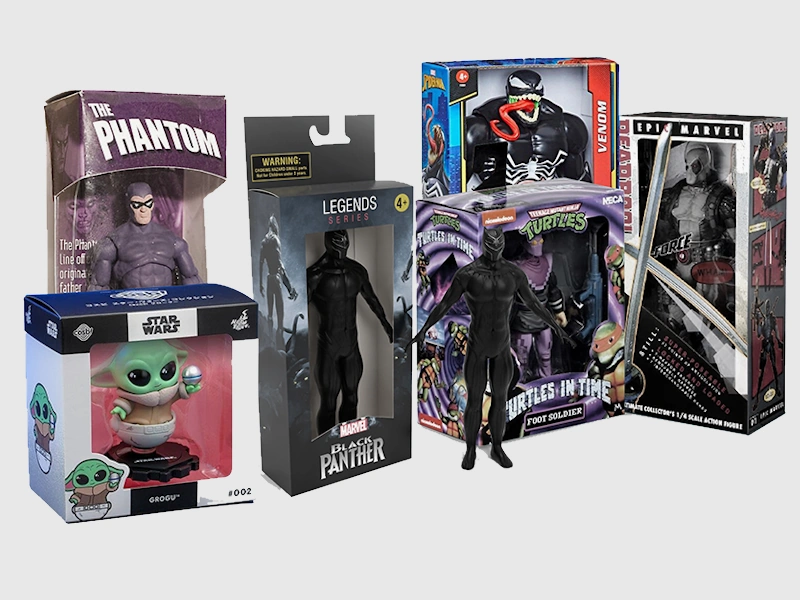
More than just simple toys, action figures serve as collectibles and display pieces. One of the most significant factors that makes them worth purchasing and attractive is their packaging.
You are probably familiar with how action figures look when placed inside their packages. These packages ensure that the action figure in package is protected, displayed properly, and attracts buyers to purchase it.
In this guide, you will discover more about what action figure packaging is, different types of packaging, packaging characteristics, and creating your own action figure package.
What is Action Figure Packaging?
The package is the outer layer employed for protecting, displaying, and marketing the action figure.
It has been developed in such a way as to secure the figure but still provide customers with an opportunity to view it without having to open the package.
Usually, packages for action figures have both cardboard backings and see-through plastic elements.
This makes it possible to ensure the safety of the figure while providing potential buyers with the ability to view it. Packages have graphic prints and other product-related information.
Collectors often prefer to keep the action figure in package because it maintains the product’s value. A well-designed package can make a simple figure look premium and collectible.
Why Action Figure Packaging Matters?
Packaging plays a major role in the success of any action figure product. It is not just about protection. It is also about presentation and branding.
Here’s why it matters:
- Protects the figure from damage during shipping
- Enhances visual appeal on store shelves
- Communicates brand identity
- Increases collectible value
- Influences buying decisions
A strong packaging design can turn a regular toy into a must-have collectible item.
Types of Action Figure Packaging
There are several types of packaging used for action figures. Each type serves a different purpose depending on the product and target audience.
Blister Packaging
It is one of the most common formats. It uses a clear plastic shell attached to a printed cardboard backing. It is an action figure packaging blister design.
This design enables the customer to visualize the figure without exposing it to dust or any other external factors.
It is one of the most common retail packaging designs due to its lightness and affordability.
Window Box Packaging
Window boxes are also commonly used for figure packaging. They are cardboard boxes with a translucent window, allowing customers to see the figure without having to open the box.
This packaging design gives more space for branding and artistic illustrations. It is commonly used for limited or collector editions.
Clamshell Packaging
Clamshell packaging is a fully plastic packaging that opens like a clamshell. It is an effective way of providing extra protection for the figure.
It may be hard for the customer to open it, which is why collectors dislike it.
Collector Display Boxes
They are considered the finest type of packaging design since they can be used both for storage and display purposes. They have elaborate prints and layers.
Key Features of Action Figure Packaging
Good packaging includes several important features that improve both function and design.
- Protection and Safety
Firstly, packaging is essential for ensuring that the action figure will be protected. It needs to offer adequate protection against potential damage caused by impact, dust, and moisture.
- Materials
Durable materials are used to keep the figure safe during transportation and handling.
- Visibility
Secondly, visibility is extremely important, particularly in the context of retail sales. Packaging featuring windows made of clear plastic allows shoppers to inspect the product before purchasing it.
It fosters buyer confidence and encourages quick decision-making.
- Branding and Design
Thirdly, packaging is also considered a valuable marketing instrument because it contains information about the company or brand through its logo and corporate colors.
Furthermore, appealing designs may increase the attractiveness of the product.
- Information Display
Lastly, important information is present
Clear information helps customers understand the product better.
Materials Used in Action Figure Packaging
Different materials are used to create durable and attractive packaging. Each material has its own benefits.
Common materials include:
- Cardboard for structure and printing
- PVC or PET plastic for clear visibility
- Foam or inserts for extra protection
- Laminated coatings for durability
The combination of these materials ensures that the packaging is both strong and visually appealing.
How to Make Custom Action Figure Packaging
Creating custom packaging allows brands to stand out and meet specific needs. If you are wondering how to make custom action figure packaging, here are the basic steps.
Step 1: Define Your Product Size
Begin by measuring the action figure. The packaging needs to be sized according to the size of the figure without leaving extra space.
Dimensions will prove to be helpful when designing an effective package.
Step 2: Decide on the Packaging Type
The next step is deciding what type of packaging would be best. There are many options, including blister packaging, window boxes, and collector boxes. Each style comes with its own advantages.
Blister packaging should be considered when packaging something for retail display. Collectors and window boxes are better suited for high-end items.
Step 3: Choose Packaging Materials
Materials are chosen based on their cost and durability. Most packages use either cardboard or plastic.
Choosing high-quality materials can make the packaging more professional and eye-catching.
Step 4: Develop Graphics
Attractive graphics should be included in the packaging. These include logos, imagery, and words.
These should match the target market.
Step 5: Include Protective Inserts
Protective inserts need to be included. They hold the figure in place and provide protection.
They are usually foam or molded plastic inserts.
Step 6: Test the Packaging
Prior to going into production, testing is done on the packaging.
Testing helps avoid problems later.
Trends in Action Figure Packaging
Packaging design continues to grow with changing market trends. Brands are always looking for new ways to improve their products.
Some current trends include:
- Eco-friendly materials to reduce waste
- Minimalist designs for a clean look
- Interactive packaging with QR codes
- Reusable boxes for collectors
These trends focus on both sustainability and customer experience.
Common Mistakes to Avoid
When designing action figure packaging, some mistakes can reduce its effectiveness. Avoiding these issues can improve your results.
Common mistakes include:
- Using weak materials that are easily damaged
- Poor sizing that allows movement inside
- Overcrowded design with too much text
- Lack of clear visibility of the figure
By avoiding these mistakes, you can create packaging that is both functional and attractive.
Benefits of Keeping Action Figures in Packaging
Many collectors prefer to keep their figures unopened. An action figure in package often holds more value than one that has been opened.
Keeping the packaging intact offers several benefits:
- Maintains resale value
- Protects the figure from dust and damage
- Preserves original condition
- Enhances display appeal
This is why packaging is so important in the collectibles market.
Conclusion
Action figure packaging is one element that is indispensable when it comes to the product itself.
In fact, packaging is responsible for protecting the action figure, improving the way it looks, and building up the image of your brand. Action figure packaging blister or boxes for collectors, there is something for everyone.
Knowing how to design custom action figure packaging will help you make sure that your product becomes a collectible item on its own merit.
Using the best material and design options, as well as coming up with unique structures, you can ensure that your product packaging adds value.

