

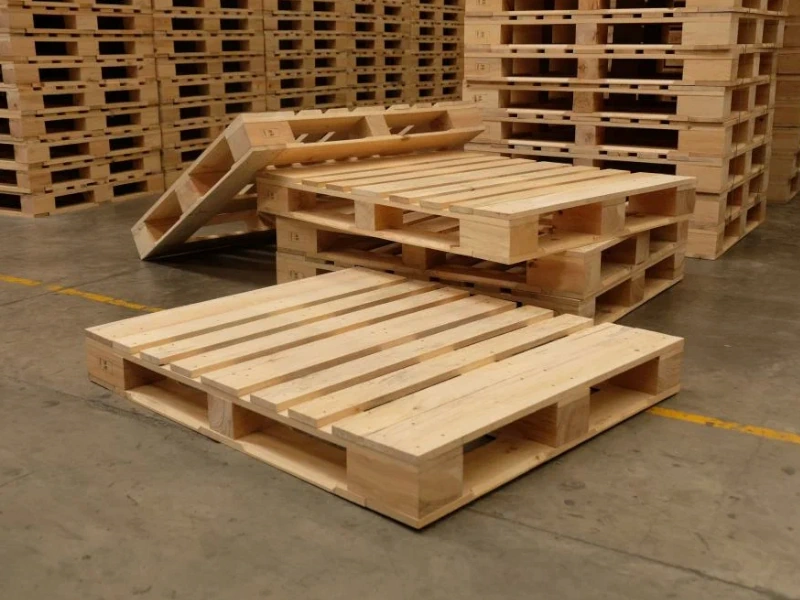
A pallet is a flat surface applied in warehouses, but it is far more than just that. It is a vital factor in the storage, handling, and transportation of products throughout the globe.
The most important size the 48 x 40 inch or GMA size when discussing a standard size in the United States. This dimension is common in grocery and retail supply chains.
It is one of the most widespread load platforms in the context of the transportation and storage of goods.
This standard design assists companies in dealing with products without difficulties. It enables the use of forklifts and pallet jacks to move and pick things fast.
Common Sizes and Dimensions of Pallets
This size is popular and useful, a fact demonstrated by the fact that about 30 percent of new wooden platforms in America are made in this size.
The frame is typically fitted with deck boards that are approximately three and a half inches wide and half an inch thick.
Pallet weight depends on its size and material.
It is robust enough to carry heavy weight and at the same time light enough to move around.
| Size | Top Deck Boards | Bottom Supports | Supports/Stringers | Safe Load (lbs) | Average Weight (lbs) |
|---|---|---|---|---|---|
| 48” x 40” | 7 | 5 | – | 4592 | 37 |
| 42” x 42” | 7 | 4 | 3 | 4445 | 36 |
| 48” x 48” | 6 | 3 | 3 | 4673 | 37 |
| 40” x 48” | 7 | 4 | 3 | 3696 | 42 |
| 40” x 40” | 6 | 3 | 3 | 3544 | 29 |
| 36” x 36” | 6 | 4 | 3 | 3544 | 32 |
| 48” x 36” | 6 | 3 | 3 | 5261 | 31 |
These standard sizes help businesses select the right structure based on load capacity, handling, and product requirements.
How the 48” x 40” Standard Began
This widely used size was introduced during World War II by the Grocery Manufacturers Association. Their goal was simple. They make shipping faster and more organized.
By using one standard size, companies could
- Move goods easily between locations
- Reduce wasted space
- Improve loading and unloading speed
- Make handling equipment more efficient
Because of these benefits, this size became the preferred choice in the grocery and retail industries.
Capacity
The standard 48” x 40” design has a height of about 4.5 inches. The structure includes top and bottom boards, along with support beams in between.
Load capacity depends on design and material, but typically:
- Can hold up to 4600 lbs
- Suitable for heavy goods like food, boxes, and bulk items
This makes it a reliable choice for daily warehouse use.
Common Materials Used
Different materials are used to build these load platforms, but wood remains the most popular. Wood is preferred due to several reasons.
- Strong and durable
- Cost-effective
- Easy to repair
- Customizable in size and design
- Suitable for heavy loads
- Recyclable and reusable
Wooden designs are widely used in manufacturing, logistics, and storage.
Other Materials
There are other materials used to make these pallets.
- Plastic is clean and moisture-resistant
- Wood is heavy and natural
However, these alternatives are usually used in specific situations where special features are needed.
Basic Design Types
There are three main structural designs used in the industry:
1. Stringer Design
- Uses horizontal wooden supports
- Usually has 3 support beams
- Can allow two-way or partial four-way entry
- Common in warehouses
2. Block Design
- Uses solid blocks for support
- Allows full four-way entry
- Stronger and more durable
- Suitable for heavy loads
3. Skid Design
- Simple structure with no bottom deck
- Lightweight and cost-effective
- Used for heavy-duty or basic applications
Design Modifications
These structures can be modified based on specific needs:
Solid Deck
- No gaps between boards
- Smooth surface
- Ideal for small or unstable items
Double Face
- Boards on both top and bottom
- Better weight distribution
- Available in reversible and non-reversible styles
Winged Design
- Extended edges for better load support
- Helps with wrapping and securing goods
Double Wing
- Extended edges on both sides
- Offers extra support and flexibility
Ways to Choose the Right Option
Various industries use different designs based on their needs.
Grocery Industry
The most frequently used dimension is 48 x 40, which is used in the grocery industry. These are ideal units with food items, boxed goods, and perishables.
- Grade A free of repairs, high-quality, and clean.
- Grade B cheaper items can be worn or repaired.
- Glass Industry
The designs of glass handling must be very tough and powerful to hold heavy bottles. Its typical size is 56 x 44, but most are made to suit a particular product.
Can Industry
These are the best platforms to carry the cans and bottled products. It is commonly 44 x 56 with a flat surface to ensure that this size does not roll or be moved during transit.
Beverage Industry
Beverage units are small, 36 x 36, and they are easily loaded and unloaded. Their small size enhances efficiency in the storage and handling of drinks.
Automotive Industry
Automotive platforms are designed to transport parts safely; in most cases, they are custom-made. The typical size is 48 x 45, which has been designed to accommodate heavy and irregularly shaped items without any damage.
Chemical Industry
Chemical platforms are safer and more durable. They are tough, durable to damage, chemicals, or severe conditions. There are special types, CP1 to CP9, which are specialized in chemical transportation requirements.
Telecommunications Industry
Telecommunications uses a size of 42 x 42. They are also applied in the paint and technical coating sectors that require medium-weight support.
Conclusion
The role of standard sizes and designs is very significant in logistics. They assist companies in transporting products more quickly and at lower costs. You can get free pallets from marts or local companies.
The most common format used is the 48 x 40 since it is efficient and reliable. It is important to know about sizes and features for businesses.

