

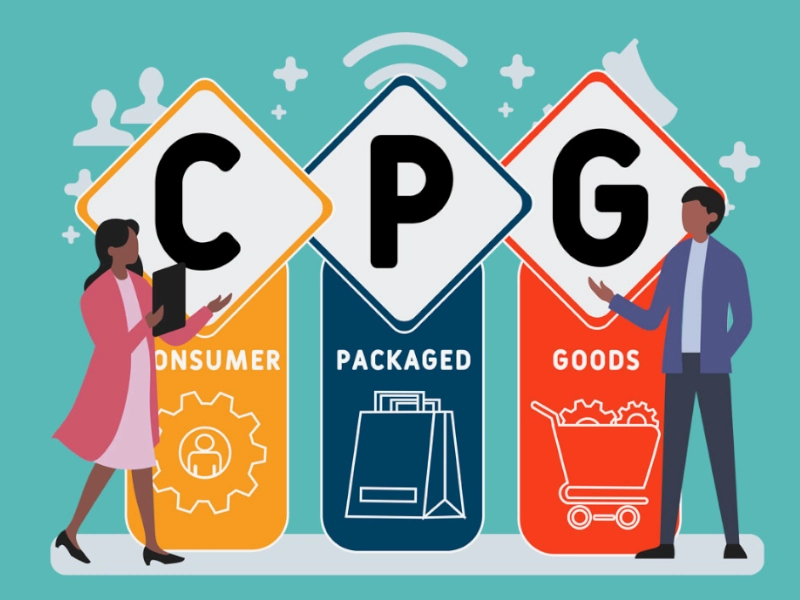
Consumer packaged goods are everyday products that are used on a regular basis. Such products need to be replaced often to ensure constant demand. As a result, the sector is very competitive and fast-growing globally.
The CPG market share shifts are also influencing how brands redesign packaging to match changing consumer expectations.
These modern design approaches improve shelf appeal and emotional value.
Market Growth Overview
The consumer-packaged goods market is expected to grow steadily in the coming years. It is forecasted to expand from USD 2,491.83 billion in 2026 to USD 3,577.46 billion by 2035, with a CAGR of 4.1%.
This growth reflects consistent demand for everyday products such as food, beverages, personal care, and household items.
Report Highlights
Global market expansion driven by demand
- North America is valued at $2 trillion
- Asia-Pacific will grow rapidly by 2030
- Food and beverage leads sales
- Offline retail remains dominant
Role of CPG in Daily Life
Consumer packaged goods are integral parts of everyday life. These consist of food and beverages, cosmetic products, and household goods.
The regular consumption pattern requires constant attention to quality, supply, and brand positioning.
Consumer goods market growth continues steadily due to rising global demand for everyday products.
The sector has demonstrated impressive performance by growing at an annual rate of 8%. Sales in the sector were expected to reach $1.62 trillion in 2017.
Sustainability and Green Practices
Sustainability has become one of the key concerns for CPG manufacturers. Currently, about 40% of companies have committed themselves to achieving environmental objectives.
Products are increasingly focused on sustainability. Manufacturers aim to make their manufacturing and marketing activities greener.
Consumer Preferences by Generation
Different generations show different buying patterns.
- Millennials and Gen Z: 79% preference
- Generation X: 78% preference
- Boomers: 70% preference
- Silent Generation: 57% preference
These insights help brands create targeted strategies and improve product positioning in the market.
Packaging and Marketing Opportunities
Package design is an essential part of both branding and marketing strategies. Packaging is usually the first thing to catch a consumer’s eye. Uniquely designed packaging makes the product stand out from other items.
Moreover, clear labeling such as “gluten-free,” “plant-based,” etc., creates additional value for the product, allowing consumers to make informed decisions about their purchase.
AI Integration in the CPG Industry
Artificial intelligence is transforming the CPG industry. Companies are using AI to improve operations and decision-making.
AI helps with:
- Demand forecasting
- Inventory management
- Supply chain optimization
- Consumer behavior analysis
This technology improves efficiency and gives companies a competitive advantage.
Global Market Expansion Drivers
Several factors are driving market growth:
- Daily consumption ensures steady demand
- Wide product range meets diverse needs
- Changing lifestyles influence buying behavior
- Technology improves production and distribution
- E-commerce increases product accessibility
These elements are helping companies expand into global markets.
Market Trends
CPG industry trends are evolving as brands focus more on sustainability and digital transformation.
| Trend | Description |
|---|---|
| E-commerce Growth | More consumers prefer online shopping |
| Eco-friendly Practices | Brands adopt sustainable packaging |
| Direct-to-Consumer | Stronger brand-customer relationships |
| Supply Chain Resilience | Better risk management and stability |
ROI and Profitability Growth
Investment returns for CPG have been increasing. Firms are making investments in smart packaging and cost optimization techniques.
The use of data analytics and AI aids in improving margins and minimizing losses. The omnichannel approach contributes to improved customer retention and revenue generation.
Supply Chain Resilience
Firms are now reinforcing their supply chains in response to any disruption. These firms are now adopting diverse suppliers and more sophisticated inventory management systems.
Technological advances are also useful in tracking the movement of goods within the supply chain.
Regional Insights
North America remains a dominant market with a valuation of $2 trillion. Major companies invest heavily in marketing to maintain their position.
The Asia-Pacific region is growing rapidly due to rising income levels. Countries like India and Indonesia are expanding their consumer base significantly.
Europe continues to show steady growth with strong retail infrastructure.
Food and Beverage Dominance
The food and beverage sector leads the CPG market. It accounts for around 44% of total sales.
However, challenges such as raw material shortages and rising costs affect this sector. Companies must adapt to maintain supply and manage expenses.
Data-Driven Marketing Strategies
Data plays a key role in improving marketing performance. Companies use data to:
- Identify target audiences
- Improve product development
- Monitor competitors
- Personalize campaigns
- This helps brands stay competitive and relevant.
Value Chain Overview
- Raw Materials
Includes plastics, paperboard, glass, and metals. Sustainability is increasing the use of recycled materials.
- Logistics
Efficient transportation and storage systems support large-scale distribution.
- Recycling
Waste management systems help reuse materials and reduce environmental impact.
Competitive Landscape
The CPG industry is very competitive. Key competitors range from international brands to emerging organizations. The CPG competitive landscape is becoming more intense as new brands enter the market.
Competitiveness is based on innovation, sustainability, and changing consumer tastes. Organizations also engage in collaborations to increase their market presence.
Product Differentiation Strategy
Companies are looking at ways through which their brands can achieve product differentiation, especially in congested markets where there is cutthroat competition.
Packaging, improved quality, and proper branding are essential in attracting more clients. Businesses that keep up with the changing times by adapting to changing market trends will gain a stronger market position and continue growing.
Consumer buying behavior trends are influencing how companies design and market their products.
Conclusion
The consumer packaged goods sector is continually growing via innovation, sustainability, and digitization.
The CPG market share shifts the impacts of competition and consumer behavior on the industry.
Those organizations that leverage technology, branding, and packaging strategies will thrive in the future.

