

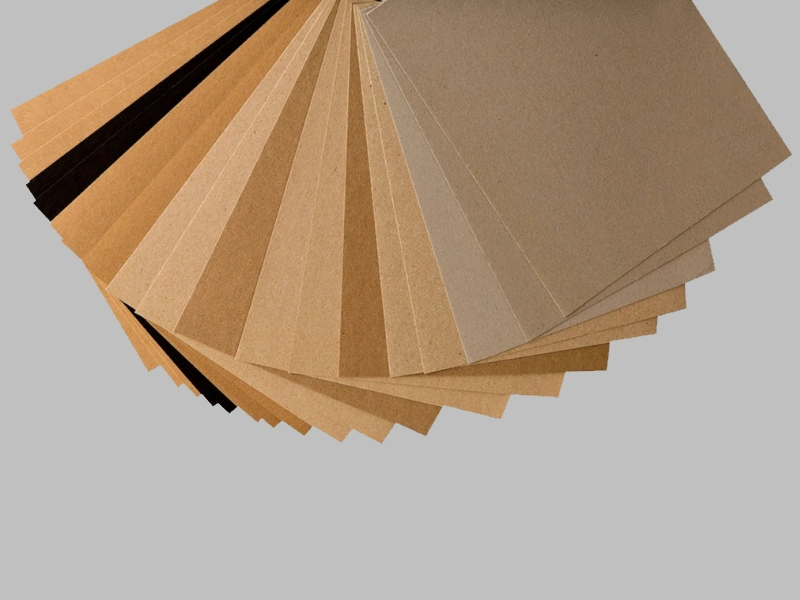
It is a dense paper-based product that is very popular in packaging and presentation of products. It is used in many industries as it provides structure and does not bulk up.
Folding, cutting, and printing are easily done on paperboard. It is easy to brand and label owing to its clean surface.
In retail shelves, storage solutions, and so on, paperboard is important in contemporary packaging with a balance in terms of protection, appearance, and cost.
How Paperboard Is Made?
Its production begins with wood fibers or recycled paper materials. These fibers are disintegrated to form pulp and combined with water to give a smooth slurry.
This mixture is then sprayed onto moving screens by large machines into thin layers. The layers are pressed and dried at a controlled pressure and heat.
Thickening and strengthening are done progressively through this process. Certain paperboard types are coated on the surface so as to enhance smoothness and printability.
On drying, roll sheets or sheets are cut into standard sizes. Thickness and density are regulated at this point by manufacturers. Paperboard recycling minimizes waste.
Common Types of Paperboards
Paperboard has various varieties, and they are ideal for paperboard packaging. Knowing these choices will enable the brands to make the appropriate material decision to be stronger, beautiful, and usable.
· Solid Bleached Sulfate (SBS)
SBS paperboard has a light white surface on both sides. The result of this clean finish is that it can be used in quality printing and crisp colors.
SBS can be folded, and it makes accurate box shapes. Although it is more expensive than other alternatives, it provides a great visual impression.
· Coated Unbleached Kraft (CUK)
Kraft paperboard boxes are made out of natural brown fibers, which contribute to strength and durability.
It has a coated outer layer that produces good printing outcomes and has a natural appearance.
The type is appropriate for use with heavy products that require additional support. It has a high fiber strength, hence its use as eco-friendly packaging by many brands.
CUK is tear-resistant and has good stress performance.
· Folding Box Board (FBB)
FBB paperboard is composed of several layers, one of which is an intermediate layer, which is composed of mechanical pulp.
This type of framing maintains the weight at a low level and introduces rigidity. FBB is suitable with regard to food wrappings, retail cartons, and pharmaceutical boxes.
Its outer layers can be printed and finished as they are smooth. The core is also light so that it does not compromise shipping weight.
· Chipboard
Chipboard is a product of paper fibers that have been pressed into thick sheets. It does not have a coated surface. This type is ideal for inner packaging or simple boxes.
Chipboard is an inexpensive product and contributes to sustainability. Lots of manufacturers make use of it as inserts and support.
Different types of paperboards are used. The decision on the appropriate one enhances the performance, presentation, and durability of paperboard boxes in applications in the industries.
Paperboard vs Cardboard
Paperboard and cardboard are different in their structure, strength, and application. Paperboard has solid layers, which are smooth and elastic.
It fits retail packaging, folding carton, and display boxes. Fluted layers are made of cardboard between liners, and this adds strength. This construction is in favor of massive loads and transport needs.
Paperboard is also better to print on and has cleaner edges. Cardboard is concerned with transport protection.
Being aware of the distinction between paperboard and cardboard will assist businesses in choosing the appropriate material to use to give the product or present it safely.
Thickness and Weight of Paperboard
Paperboard thickness affects strength and performance. Thin paperboard suits light products like cosmetics or food items. Thicker options support heavier goods without bending.
Weight also matters during shipping and handling. Lighter boards reduce transport costs and improve stacking efficiency.
Excess thickness can increase expenses without added benefit. Manufacturers measure thickness in points or millimeters to maintain consistency.
Choosing the correct balance prevents damage and waste. Proper thickness selection ensures reliable protection while keeping packaging efficient.
Printing and Finishing on Paperboard
It supports a wide range of printing and finishing techniques. Smooth surfaces allow text and clear images. Offset and digital printing work well on coated boards. Finishing options are several.
- Gloss
- Matte
- Emboss
- Foil accents
These details enhance shelf appeal and brand recognition. This material maintains its structure even after multiple finishing steps.
Strong surfaces prevent cracking along folds. This flexibility makes paperboard ideal for branded packaging that demands both style and function.
Strength and Durability
This is a material with great strength as per its weight. Several layers of fiber enhance bending and tearing resistance.
Paperboard is lighter than corrugated material and can be used in retail and storage. Fibers are durable to support the shape of the box as time goes by.
The packaging is well done, and it does not add unnecessary weight to the products. This balance is dependable in most commercial applications.
Cost Benefits
It has excellent cost benefits to the business. Material costs remain cheaper compared to inflexible options.
Cutting and folding are easily done through easy methods that save time. Light sheets reduce the cost of shipping.
Direct printing on this board saves the additional labeling process. Waste is minimized through effective design.
Through these savings, the brands can operate on budgets without compromising quality. This board is used to provide value for both small and large packaging runs.
Conclusion
Paperboard is a packaging material that is very versatile and reliable. It is a combination of power, lightness, and beauty. Wide varieties fit in their packaging requirements.
Branding objectives are facilitated by easy printing and customization. Good design enhances protection and efficiency.
Paperboard can be used to serve retail, food, and custom packaging needs with proper selection. Its functionality and usefulness explain its reliability in all industries.

