

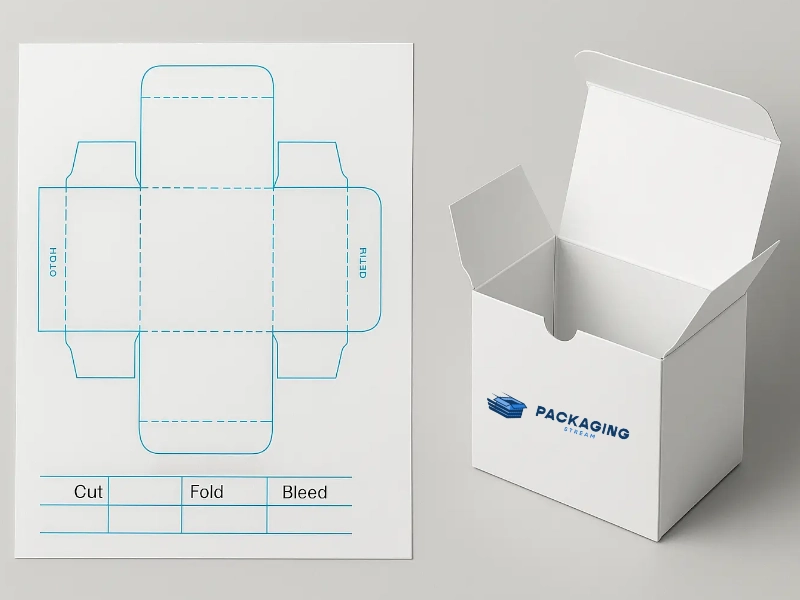
A dieline is a template in packaging and printing. It demonstrates the point of cutting and folding with the placement of designs.
It is used by designers and printers to ensure that the final product is right. Dielines prevent errors and wastage of materials.
They also ensure that designs fit well in the packaging. A dieline makes sure that all the labels and boxes are correct with all the folds and cuts.
It assists in producing professional packaging.
The Purpose of Dielines in Packaging and Printing
Dielines lead to the manufacture of packaging. They demonstrate where it needs to be cut, folded, and assembled.
Designs can be improperly placed on the package because there is no dieline. Dielines are also used in planning the layout before production by the teams.
They save time, minimize errors, and minimize wastage of materials. Dielines are used to guarantee the size requirements and safety of the packaging.
In the case of brands, this implies that all products appear clean, business-like, and dependable. Customers perceive quality and are assured of the brand.
How Dielines Help in Packaging Design
Dielines simplify the design of packaging. Designers are able to insert logos and images in the right place. They demonstrate the way in which designs encircle folds and perimeters.
This will ensure that nothing goes off track or misses out on significant details. Prototypes are also easier to test with dielines.
The designers are able to preview the packaging. They save time, minimize mistakes, and achieve consistency. The packaging is functional in addition to being appealing with a dieline.
Key Elements of a Packaging Dieline
A dieline has several key parts. This helps make the packaging accurate and easy to assemble.
- Cut lines show where the package should be cut.
- Folds indicate where to fold for the final shape.
- Bleed area is an extra space to avoid white edges.
- Safety area keeps important text or logos inside safe zones.
- Registration marks help printers align colors and layers.
- Die marks show where trimming will happen after printing.
These elements make sure the packaging is professional, safe, and ready for use. Every detail matters to get the best result.
Types of Dielines for Different Packaging
Different products need different dielines. Each type ensures the packaging works perfectly.
- Folding carton dielines are used for cereal boxes and retail packaging.
- Mailer box dielines are designed for shipping and e-commerce.
- Sleeve dielines wrap around bottles or jars.
It needs to choose the right dieline type to ensure correct folding and presentation. The packaging looks professional and fits the product perfectly.
Steps to Create a Dieline
Dieline is done in a number of steps. This makes sure the packaging done in the end is right.
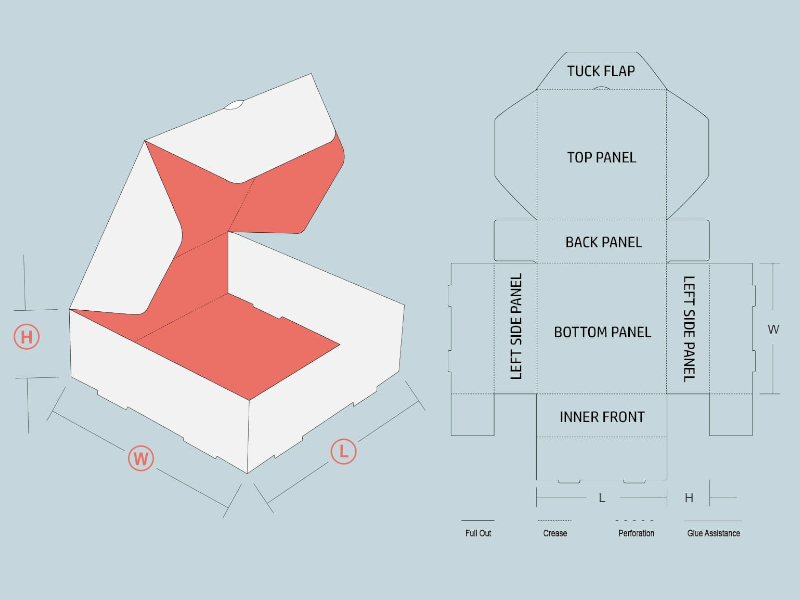
- Take measurement of the product dimensions.
- Draw a template and crossfolds and panels.
- Include bleed and safety areas to prevent the loss of valuable content.
- Fold and cut lines to clear them to be printed.
- Add registration marks to match colors and layers.
- Test with a prototype. Fold and assemble to check.
These measures will prevent errors and make the design ideal and efficient prior to manufacturing.
Dielines and Brand Consistency
The dielines are used to maintain packaging. Logos and color remain at the right location. This renders goods homogenous and business-like.
Regular packaging creates a sense of trust and identity of the brand to the customers. Dielines also make sure there is a similar style of multiple products in a line.
This enhances brand recognition and makes your packaging dependable.
Benefits of Using Dielines in Production
Dielines save time and money while improving quality.
- Accurate cuts and folds with clean and precise assembly.
- Less waste and Paper, cardboard, and ink are saved.
- Guides designers and printers efficiently.
- Misprints and misaligned designs are avoided.
- Everyone understands the template.
- Meets labeling and safety standards.
Using dielines ensures smooth production and consistent high-quality packaging.
Tips for a Perfectly Aligned Dieline
To make a dieline work perfectly, follow these tips:
- Measure carefully: Check product dimensions.
- Check fold lines: Edges must match correctly.
- Keep safety margins: Text and logos stay safe.
- Maintain bleed areas: Prevent white edges after cutting.
- Double-check graphics: Nothing should be cut off.
- Test a prototype: Fold and assemble before printing.
These tips prevent mistakes and produce packaging that looks professional and works as intended.
Conclusion
A dieline is a cutting and assembling guide in packaging. It makes sure that the design fits in well and wastes materials.
Dielines ensure brand consistency and produce a professional look for products. They minimize mistakes, enhance efficiency, and conform to safety standards.
The application of dielines makes packaging attractive, usable, and prepared for customers.
All designers and printers are enjoying having dielines to create quality, dependable, and reliable packaging.

