

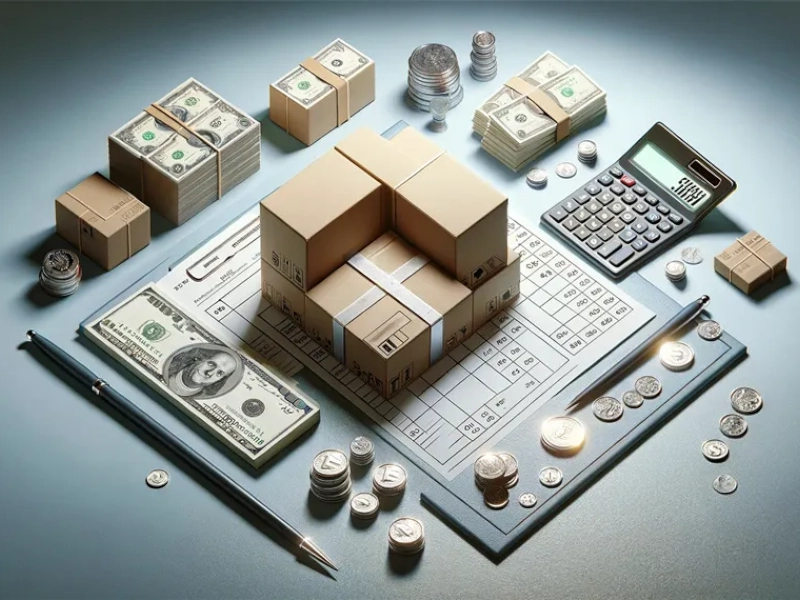
It may not be difficult to calculate packaging cost when you are aware of what to include. Begin by listing off all materials such as boxes, labels, and inserts.
Then there is the cost of labor, production, and shipping. Other items, such as coating or embossing, are also added to the overall. All this will give the overall packaging cost.
The knowledge of this assists businesses in planning their budgets well and prevents surprises.
It is also used to make intelligent decisions regarding the materials and production techniques through clear computations.
Know Your Packaging Price
You must focus on every part of the cost. Begin with such materials as boxes, paper, and labels. Add printing, coatings, and inserts.
Then there is the labor and cost of production, such as machine work or assembling. Handling and shipping fees are included, too.
Additional options, such as embossing or special finishes, will increase the cost but will enhance the appearance of the product.
Disparagement of every segment provides an accurate picture of costs. This makes budgeting easier.
Pricing of your packaging can assist in project planning and ensure you do not spend heavily or run into surprises.
Types of Packaging Materials and Their Cost
The packaging material will influence the cost and protection. The correct type selected ensures that products are kept safe and costs are controlled.
- Cardboard
This is easy and less costly. Thin boards are cheaper. Thicker ones are stronger but more expensive. Most products can be printed on cardboard.
These boxes are robust and ideal for shipping. Double-wall boxes are more expensive but are used for heavy or fragile products.
- Green Materials
Green packaging has various options. Kraft paper costs more but attracts environmentally-conscious customers.
- Luxury and Rigid Boxes
They give a premium feel. They cost more because of thicker materials and finishing.
Select the right material that balances cost and appearance. Comparing materials before deciding helps you make smart choices for each product.
Factors That Affect Cost
Packaging costs can be altered by a number of factors. By knowing them, it is easy to plan budgets appropriately.
- Size of Packaging
Large boxes require more material and are more expensive. The shipping cost can also rise in the case of extra-large boxes. Small boxes are relatively cheaper, and they might require additional padding.
- Design and Printing
Personal designs or full color prints are higher cost. Simple designs are cheaper. Embossing, foiling, or complex logos are costly to package. Quantity Ordered: The bigger orders save on per-unit costs. Small orders are expensive per unit due to the fixed costs of setting up and production.
- Finishing Options
Packaging can be made to appear high-end through the use of coatings, embossing, or foil stamping, at a high price.
- Special Inserts
Dividers, protection inserts, or trays are additional expenses. They enhance the safety and display of the products.
The knowledge of these factors contributes to the control of costs. When packaging is planned with such considerations, costs remain realistic, and no surprises are encountered.
Labor and Production Costs
Work required to prepare packaging comes under labor and production costs. There are costs of machines, printing, cutting, and assembly. With skilled labor, quality is guaranteed, but at a higher cost.
Automation of production is able to save labor, but an investment would be required. Small production batches are more expensive when compared to a unit since the setup time is fixed. Massive production is more cost-effective and efficient.
The cost of labor and production taken into account assists in planning the costs of packaging in total.
Being aware of these numbers will guarantee the maintenance of budgets, and they will avoid unwanted surprises.
Shipping and Handling Costs
Packaging costs include shipping and handling costs. The price is dependent on weight, size, and shipping distance.
Dainty objects might require additional cushions, which will be expensive. Mass-based orders have the potential to reduce the unit cost.
Lightweight yet tough packaging is cost-effective and also safeguards products. Handling and storage in the warehouses should be taken into consideration.
The inclusion of these costs in the sum provides a real picture of costs. Good planning would mean that customers receive their products without the risk of having to bear additional charges.
Use Online Packaging Cost Calculators
Online packaging cost calculation tools ensure that cost estimation is easy. Calculators can be used for both small and large batches or new products that have a business of any size.
They give a clear perspective of what should be spent before production is undertaken.
Tips to Reduce Packaging Costs
Simple changes and smart planning assist. You can decrease the cost without compromising on quality.
- Choose Standard Sizes
The standard box sizes are cheaper to manufacture. They also transport cheaply without incurring an additional expense.
- Use Lightweight Materials
Lighter materials reduce the cost of shipping and materials.
- Order in Bulk
Purchasing in bulk will lower the unit cost. Mass orders are cost-effective in the long run.
- Simplify Design
The cost of minimal printing and simple finishes is lower. The unnecessary use of complicated logos should be avoided.
- Optimize Inserts
Only use inserts when needed. Correctly sized inserts compromise security and expenditure.
Such tips manage the costs and retain packaging efficiency. Proper planning would make products safe and costs manageable.
Calculate the Final Price Made Easy
To obtain the final packaging price, sum all the costs. The first one is materials, then labor, and production. Include freight, handling, and other finishes or inserts.
Check the sum of money. Break results in unit-based costs. It can be done faster and easier by using online calculators.
The quality and cost balance are achieved through comparison of the materials and designs.
Make sure that you do the final calculation properly to make sure that your budget is realistic and also to plan on packaging without any surprises.
Conclusion
It is not difficult to compute the packaging cost when you factor in all parts. Begin with materials, labor, and freight. Include design, finishes, and inserts.
This can be simplified with the help of online calculators. The total cost is known to plan, budget, and prevent surprises.
Innovative decisions in resources, design, and manufacture make packaging lean and low-cost.
Easy cost computation guarantees that goods are secure, polished, and inexpensive. Packaging is easily predictable and smooth with adequate planning.

