

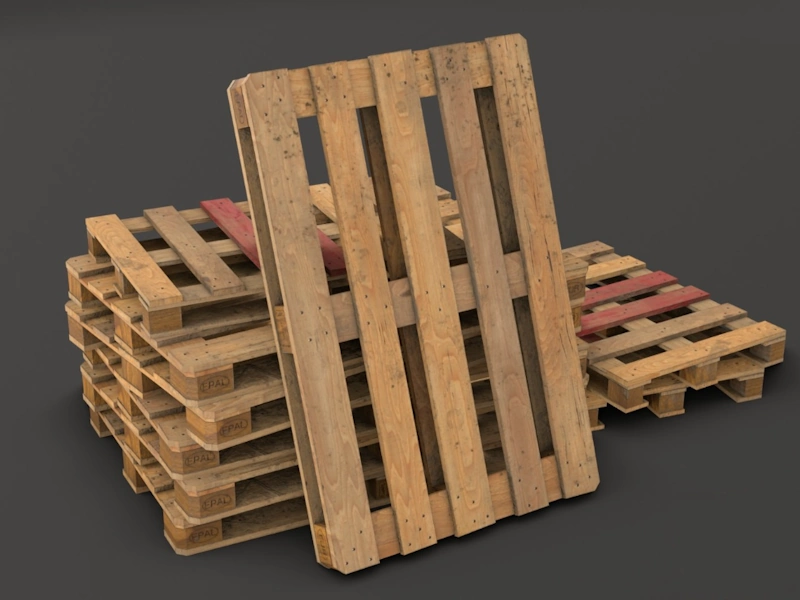
Knowledge of pallet weight is significant in freight and warehouse management. Pallets are used in businesses to transport products without damaging them on their way to a different location.
The freight pricing, storage planning, and equipment choice are dependent on the weight of the pallet itself.
The companies can prevent overloading of trucks and meet shipping requirements with the knowledge of the proper weight of a pallet.
Overview of Average Weight of Pallets
It also assists warehouse groups in planning their storage area and managing goods. Most pallets have a weight of thirty to seventy pounds, which can be thirteen to thirty two kilogram.
Their precise weight depends on the size and material. The pallet styles are also varied in different regions, and this may cause a weight difference.
Average Pallet Weight by Size
The dimensions of a pallet directly influence its weight. Smaller pallets require less material and therefore weigh less.
Larger platforms are heavier because they contain more wood or structural support.
| Pallet Size (Inches) | Approx. Weight (lbs) | Typical Load Capacity (lbs) |
|---|---|---|
| 24 × 24 | 14 | Up to 1,000 |
| 30 × 30 | 22 | Around 1,200 |
| 36 × 36 | 32 | 2,200 – 3,500 |
| 40 × 40 | 28 | About 2,500 |
| 40 × 48 | 40 | Up to 4,600 |
| 42 × 31 | 31 | Around 6,585 |
| 42 × 42 | 35 | About 3,700 |
| 47 × 32 | 32 | Up to 5,000 |
| 48 × 36 | 35 | 3,500 – 5,000 |
| 48 × 40 | 35–40 | 2,500 – 4,600 |
| 48 × 42 | 42 | 2,000 – 5,000 |
| 48 × 45 | 44 | Suitable for lighter loads |
| 48 × 48 | 40 | 3,700 – 4,600 |
These numbers are general estimates. Actual weights may vary depending on construction methods and materials.
Pallet Weight by Material Type
The weight of a pallet depends on the material that is used in constructing it. This is one of the most significant factors. The various materials have varying strengths and durability.
- Wooden Pallets
The average weight of pallets is thirty to seventy pounds. Specific weight is determined by the type of wood and pallet design.
- Hardwood Pallets
Hardwood pallets are made from dense wood types.
- Oak
- Maple
- Hickory
These woods are strong and durable, which makes them suitable for transporting heavy goods.
Weight is about forty to seventy pounds and eighteen to thirty two kilogram. Load capacity is three thousand pounds to four thousand five hundred pounds.
They are used for heavy industrial loads. Pallets made from dense materials tend to weigh more.
- Softwood Pallets
They are made from lighter wood species such as:
- Pine
- Cedar
- Spruce
- Fir
They are commonly used in general shipping and retail supply chains. Weight is about thirty to fifty pounds and thirteen to twenty three kilogram. Load capacity is two thousand to three thousand pounds.
- Plastic Pallets
Such materials develop light but tough shipping platforms. Food or pharmaceutical industries are the most common sectors that use plastic pallets because of the need for moisture-resistant pallets.
These pallets resist chemicals and pests that make them useful in many environments.
- Metal Pallets
They are designed for heavy-duty applications.
- Steel
- Aluminum
They are much heavier than wood or plastic options because of their strong construction. Their typical weight range is 100 to 200 pounds and 45 to 90 kilograms.
Their weight differences are by metal type. Steel pallets weigh one hundred fifty to two hundred pounds, and Aluminum pallets weigh one hundred to one hundred thirty pounds.
- Presswood Pallets
These are produced by compressing wood fibers and resin into a molded form. They are made lightweight and friendly to the environment.
Export shipping is also carried out on such pallets since they commonly correspond to the international shipping requirements without any extra treatment.
- Lightweight structure
- Space-saving design
The final weight depends on the density of the compressed material and the pallet size.
Factors That Influence Pallet Weight
The weight of a pallet is influenced by a great number of factors.
- The lightest types are typically plastic pallets.
- The wooden pallets differ according to the type of wood.
- The most massive are metal pallets.
Pallet Design
Construction style also affects weight. Some common pallet designs are here.
- Single-deck pallets are a lighter structure
- Double-deck pallets are stronger but heavier
- Stringer pallets are typically lighter
- The block pallet is a heavier design
- Open decks reduce weight
- Solid decks increase weight
Nestable designs also use less material and therefore weigh less.
Why Pallet Weight Matters in Logistics?
- It plays an important role in supply chain operations.
- Freight cost calculations
- Shipping carriers charge based on the total shipment weight. This includes the product weight and the pallet weight
- Heavier pallets can increase overall freight costs.
- Fuel efficiency
In trucking and air freight, extra weight means higher fuel consumption. Using lighter pallets can help reduce transportation expenses.
There are many places where you can find free pallets.
Conclusion
The weight of pallets is a key parameter in shipping and supply chain activities, as well as storage.
The weight is subject to various factors such as size, material, design, and environmental factors.
These differences make it possible to use the appropriate type of pallet and enhance the efficiency of logistics.
Properly known weights will also help to avoid overloading and ensure the safe transportation of goods along the supply chain.

