

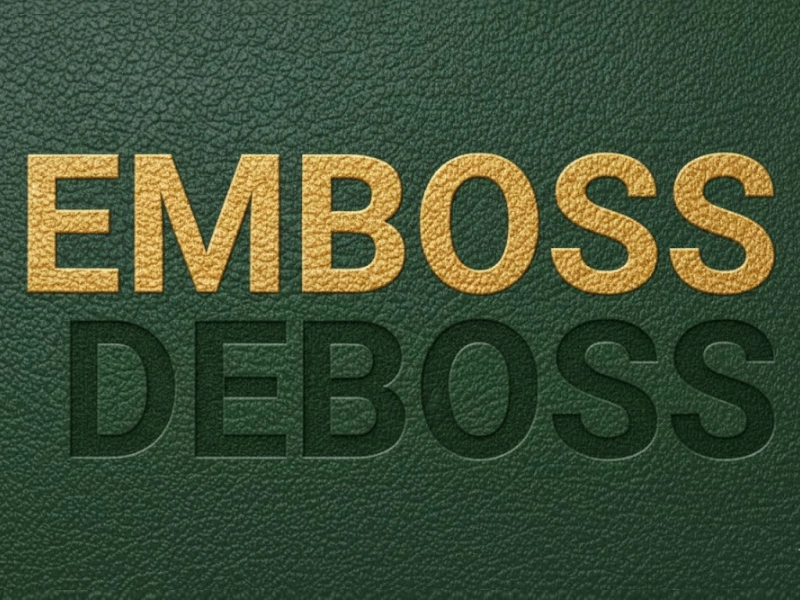
Embossing and debossing are finishing techniques used on packaging paper to create texture. They develop an inkless raised or pressed pattern. This makes packaging easy to touch and visualize.
Embossed vs debossed describes the direction of the design, whether it comes out or goes in.
Both processes involve the use of metal and pressure dies. They can be used to provide detail.
These methods are concerned with texture, which is why they assist in designing to be more realistic and understandable.
Embossing vs Debossing
These are two techniques that make your packaging special and appealing. Embossing forms a pattern on the surface.
A design is applied onto the surface using a debossing press. Direction is the primary distinction. One moves up. The other moves down. The embossing is more tangible. Debossing is delicate and fine.
The two require pressure and a custom die. They do not need ink to work. The decision will be made according to the design objective.
Some brands want a bold feel. Others want a soft look. This opposition is frequently described as deboss vs emboss of packaging.
How Techniques Work?
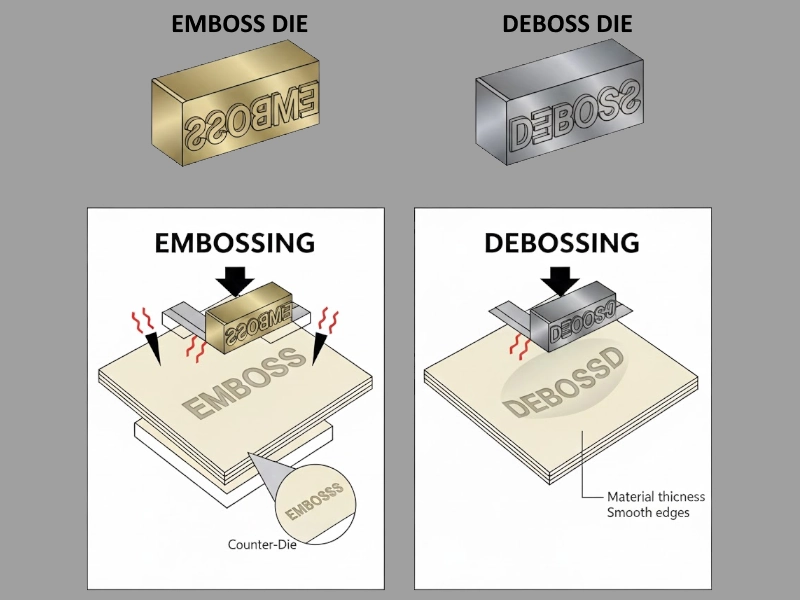
Both techniques start with a metal die. The die carries the design shape. Paper or board is placed between the dies. Pressure is then applied.
In embossing, the material is pushed upward. In debossing, it is pushed downward. Heat may be used to make clean edges.
No ink is needed for the effect. The process changes only the surface level. Care is needed to avoid tearing. Thickness of material matters. The goal is to keep the design sharp and smooth.
Materials Used for The Techniques
Paper and board materials work best. Cardstock is commonly used. Kraft paper can also handle pressure well. Rigid boxes support deep impressions. Soft papers need gentle pressure. Coated papers may crack if pressed too hard. Leather and fabric can also be used in some cases.
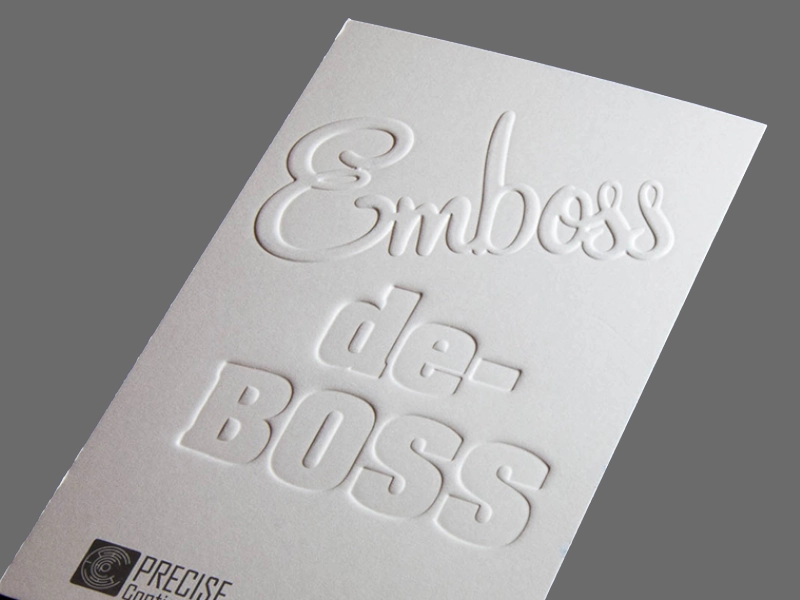
Material thickness affects the result. Thicker stock gives better depth. Smooth surfaces show detail clearly. Choosing the right material helps avoid damage. It also keeps the design clean and readable.
Common Uses in Packaging
- Logo Highlighting
They are commonly applied to the logos because they are beneficial in making the brand name stand out. The elevated or depressed bump is tactile. This adds identity to the box. The logo remains visible even without ink. It also looks clean and neat.
- Product Name Emphasis
Embossing of product names is sometimes done. It is the best option to make the logo or brand name visible. When a soft appearance is required, then debossing is used. The two methods retain text readability. They also do not encounter print clutter. This is good with simple layouts.
- Pattern and Texture Design
These techniques are used to repeat patterns. They provide boxes with a rough texture. This renders plain packaging interesting. Patterns may be used on entire panels. They remain subtle and serene.
- Decorative Borders
These boundaries are commonly embossed. This gives the design a nice frame. It provides a structure to the face of the box. Embossed edges produce a stamped contour. Both guide the eye gently.
- Overall Impact
These applications make the packaging appear elaborate. They enhance the feel as well. The methods endorse design without additional color.
Benefits of Both Textured Techniques
The given approaches have practical and visual advantages. They are concerned with texture and clarity.
- Better Touch Experience
These techniques are used to create raised or pressed designs. The customers notice that the types of textures are fast. This establishes a physical relationship. It makes the design interact with packaging. Touch helps memory.
- Clean and Ink-Free Finish
The effect does not need the use of ink. This keeps the design simple. It reduces print layers. The surface stays neat. This reduces visual noise as well.
- Long-Lasting Design
Embossed and debossed parts do not wear out. There is no ink to wear off. The design remains unobstructed as time goes by. This comes in handy during long storage.
- Improved Readability
In-depth text is more readily located. Visibility is aided by light and shadow. Even simple fonts stand out. This assists the users in reading key information.
These techniques are handy due to these advantages. They enhance form and functionality, and they perform well with minimal designs.
Visual Impact on Packaging Design
Visual depth changes how packaging is seen. These techniques guide attention.
- Depth and Shadow Effect
Raised and pressed areas catch light. Shadows form naturally. This adds dimension. Flat designs become lively. The effect is subtle but clear.
- Focus on Key Elements
Designers use embossing to guide the eye. Important parts stand out first. Debossing keeps focus calm. This helps with layout balance.
- Minimal Design Support
These techniques work well with simple designs. They add interest without color. White or plain boxes feel richer. Texture replaces heavy graphics.
- Consistent Look
Embossed and debossed designs stay uniform. There is no color mismatch. This keeps the look steady. It helps maintain design control.
The visual impact is quiet but strong. It supports clarity and structure. The design feels thoughtful and refined.
Styles on Which Techniques Are Applicable
These methods are well supported by different styles of packaging. There are different structures and shapes in which these techniques are used.
- Rigid Boxes
Pressure is easily managed in rigid boxes. They allow deep impressions. Logos look sharp. The surface stays firm. This gives clear results.
- Folding Cartons
Embossing light is supported with cartons. Its best performance is in medium depth. Thin stock must be taken care of. The result stays clean.
- Kraft Packaging
Kraft paper displays texture in a clear manner. Embossing is a form of detailing with no ink. Debossing blends naturally. The look stays simple.
- Minimalist Packaging
Plain styles are the greatest beneficiaries. Distractors are not so many. Texture becomes the focus. The design feels balanced.
These types enable the use of pressure to be safe, and they protect the material. They also maintain the design to be visible and consistent.
Conclusion
These are surface design processes. They alter the feel and appearance of packaging because they apply pressure rather than ink.
Embossed vs debossed gives the explanation on whether the design is raised or sunk. Both add depth and texture. They also favor straightforward and simple designs.
It is applicable to a wide range of materials using these methods. They enhance touch and visual details.
They can be used wisely, and thus they can assist in producing clean and legible packaging without additional print elements.

